FASHION News
Discover Fashion Week side events, fringe events, luxury brand activations, runway experiences, designer events, exclusive parties, and global fashion culture.
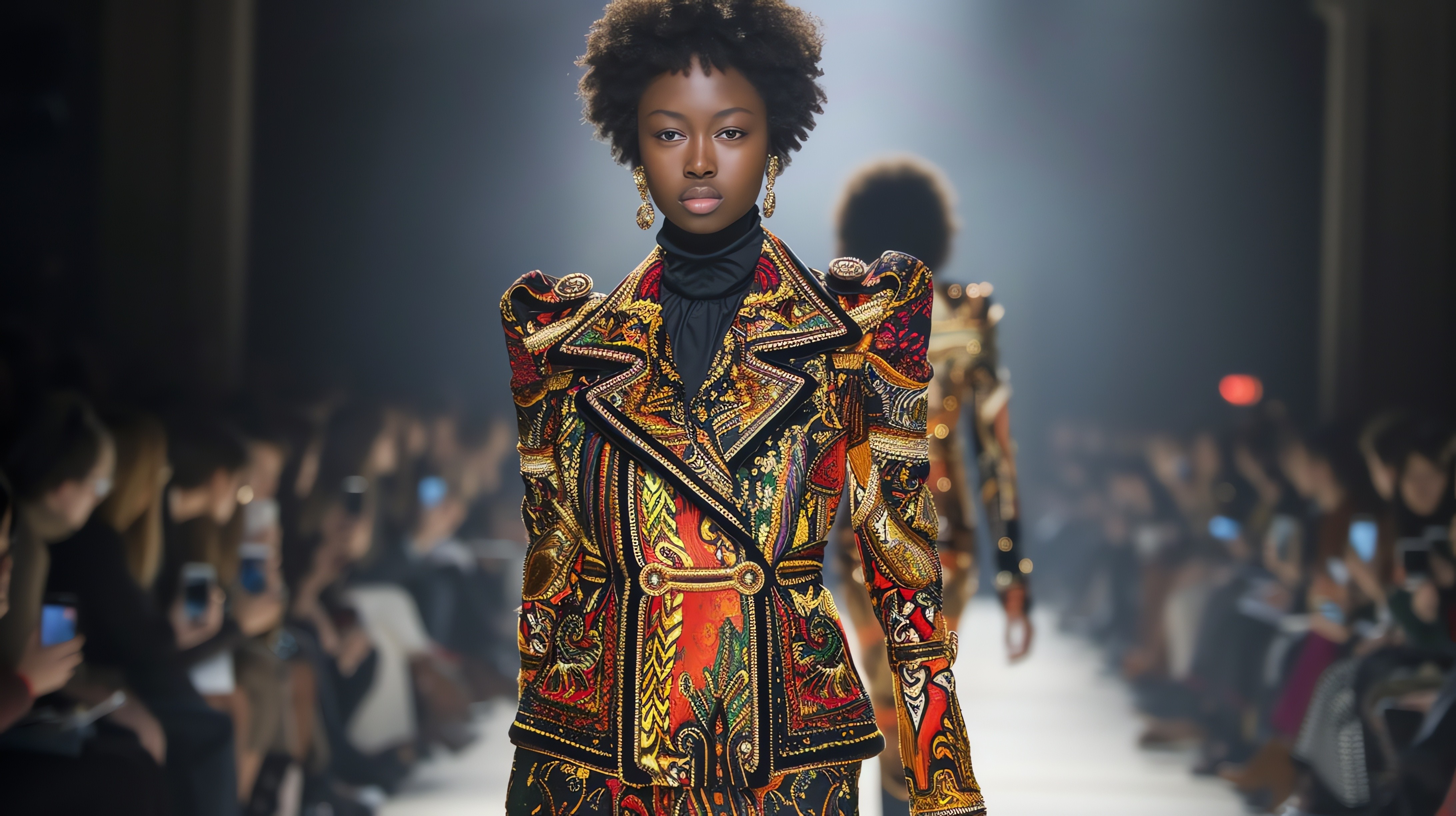
New York Fashion Week has always kept two clocks. One belongs to the official calendar, the tightly held sequence of appointments that runs this season from 10 to 15 September, opening with Henry Zankov's debut for Diane von Furstenberg and closing, as it so often does, with Thom Browne. The other clock is looser and far harder to read. It runs in the hours between the shows, in the slow taxi crawl from Tribeca to the Meatpacking District, in the loose forty minutes when a buyer has no appointment and a whole city outside the car window. That second clock is where New York writes its own account of the season, and this year it is keeping remarkable time.
Read the week only through the runway calendar and you miss most of it. While the credentialed few move between venues, the city stages a parallel program in daylight and in public. Moncler has turned Grand Central's Vanderbilt Hall into a retrospective on two decades of its life in New York. Bvlgari has sent a monumental Serpenti coiling along the High Line, where it will outlast the week itself. A Chanel fragrance cafe settles into Meatpacking, a Carolina Herrera fragrance lab into SoHo, and a fleet of smaller activations threads the blocks between, each one a small argument for slowing down and stepping inside. None of it appears on the official schedule. All of it belongs to the same season.

The instinct is to cast these as a rival week, the unofficial standing against the sanctioned. That reading gets the geometry wrong. The fringe does not compete with the tents; it widens the doorway into them. The runway sets the season's vocabulary, its silhouettes and its arguments, and the streets repeat that vocabulary back in a register anyone can hear. A public runway at Gotham Hall or Sony Hall sells a seat to a student who will never receive a CFDA credential. A pop-up hands a passerby the same fragrance a front row will smell on an editor two days later. The official program speaks precisely and privately. The programming around it translates, and translation is how a language survives.
This year the translation runs unusually deep into the boroughs. Brooklyn Borough Hall hosts a civic runway built around the neighborhoods rather than the labels. The Brooklyn Navy Yard closes out the week with a festival crowned by a Victoria Monet performance, fashion folded into music and food and the ordinary pleasure of a Friday night. Uptown, a showcase of Latin American designers claims the United Palace for an evening. The map of the week has quietly stopped ending at the edge of downtown Manhattan, and the collections are the better for being carried that far.
Two details give this particular September its weight. It is the first season to run under the CFDA's fur-free policy, a line drawn cleanly through the official calendar that the surrounding programming has largely absorbed without comment. And on Friday, the twenty-fifth anniversary of 11 September, the schedule opens later than usual, a small act of deference that the whole city, ticketed and not, seems to observe together. A week that can hold both its commerce and its remembrance is a week doing more than selling clothes.
This is the terrain the Frynge was built to read. What the two clocks share, in the end, is an audience that no longer accepts the old division between inside and outside. The person livestreaming a runway from a phone is the same person queuing for the pop-up, the same person on the Navy Yard lawn, the same person reading the season back to itself in real time. The official calendar still sets the hour. The city has simply decided to fill every minute around it, and in doing so it has made the case that fashion week was never only the shows.
So the question worth carrying into the next six days is not which clock to follow. It is what we notice when we finally look up from the schedule: whether the season lives on the runway, or in the crowded, generous, unofficial hours we spend getting there.
New York Fashion Week has always kept two clocks. One belongs to the official calendar, the tightly held sequence of appointments that runs this season from 10 to 15 September, opening with Henry Zankov's debut for Diane von Furstenberg and closing, as it so often does, with Thom Browne. The other clock is looser and far harder to read. It runs in the hours between the shows, in the slow taxi crawl from Tribeca to the Meatpacking District, in the loose forty minutes when a buyer has no appointment and a whole city outside the car window. That second clock is where New York writes its own account of the season, and this year it is keeping remarkable time.
Read the week only through the runway calendar and you miss most of it. While the credentialed few move between venues, the city stages a parallel program in daylight and in public. Moncler has turned Grand Central's Vanderbilt Hall into a retrospective on two decades of its life in New York. Bvlgari has sent a monumental Serpenti coiling along the High Line, where it will outlast the week itself. A Chanel fragrance cafe settles into Meatpacking, a Carolina Herrera fragrance lab into SoHo, and a fleet of smaller activations threads the blocks between, each one a small argument for slowing down and stepping inside. None of it appears on the official schedule. All of it belongs to the same season.
The instinct is to cast these as a rival week, the unofficial standing against the sanctioned. That reading gets the geometry wrong. The fringe does not compete with the tents; it widens the doorway into them. The runway sets the season's vocabulary, its silhouettes and its arguments, and the streets repeat that vocabulary back in a register anyone can hear. A public runway at Gotham Hall or Sony Hall sells a seat to a student who will never receive a CFDA credential. A pop-up hands a passerby the same fragrance a front row will smell on an editor two days later. The official program speaks precisely and privately. The programming around it translates, and translation is how a language survives.
This year the translation runs unusually deep into the boroughs. Brooklyn Borough Hall hosts a civic runway built around the neighborhoods rather than the labels. The Brooklyn Navy Yard closes out the week with a festival crowned by a Victoria Monet performance, fashion folded into music and food and the ordinary pleasure of a Friday night. Uptown, a showcase of Latin American designers claims the United Palace for an evening. The map of the week has quietly stopped ending at the edge of downtown Manhattan, and the collections are the better for being carried that far.
Two details give this particular September its weight. It is the first season to run under the CFDA's fur-free policy, a line drawn cleanly through the official calendar that the surrounding programming has largely absorbed without comment. And on Friday, the twenty-fifth anniversary of 11 September, the schedule opens later than usual, a small act of deference that the whole city, ticketed and not, seems to observe together. A week that can hold both its commerce and its remembrance is a week doing more than selling clothes.
This is the terrain the Frynge was built to read. What the two clocks share, in the end, is an audience that no longer accepts the old division between inside and outside. The person livestreaming a runway from a phone is the same person queuing for the pop-up, the same person on the Navy Yard lawn, the same person reading the season back to itself in real time. The official calendar still sets the hour. The city has simply decided to fill every minute around it, and in doing so it has made the case that fashion week was never only the shows.
So the question worth carrying into the next six days is not which clock to follow. It is what we notice when we finally look up from the schedule: whether the season lives on the runway, or in the crowded, generous, unofficial hours we spend getting there.

4 min read
New York Fashion Week has always kept two clocks. One belongs to the official calendar, the tightly held sequence of appointments that runs this season from 10 to 15 September, opening with Henry Zankov's debut for Diane von Furstenberg and closing, as it so often does, with Thom Browne. The other clock is looser and far harder to read. It runs in the hours between the shows, in the slow taxi crawl from Tribeca to the Meatpacking District, in the loose forty minutes when a buyer has no appointment and a whole city outside the car window. That second clock is where New York writes its own account of the season, and this year it is keeping remarkable time.
Read the week only through the runway calendar and you miss most of it. While the credentialed few move between venues, the city stages a parallel program in daylight and in public. Moncler has turned Grand Central's Vanderbilt Hall into a retrospective on two decades of its life in New York. Bvlgari has sent a monumental Serpenti coiling along the High Line, where it will outlast the week itself. A Chanel fragrance cafe settles into Meatpacking, a Carolina Herrera fragrance lab into SoHo, and a fleet of smaller activations threads the blocks between, each one a small argument for slowing down and stepping inside. None of it appears on the official schedule. All of it belongs to the same season.
The instinct is to cast these as a rival week, the unofficial standing against the sanctioned. That reading gets the geometry wrong. The fringe does not compete with the tents; it widens the doorway into them. The runway sets the season's vocabulary, its silhouettes and its arguments, and the streets repeat that vocabulary back in a register anyone can hear. A public runway at Gotham Hall or Sony Hall sells a seat to a student who will never receive a CFDA credential. A pop-up hands a passerby the same fragrance a front row will smell on an editor two days later. The official program speaks precisely and privately. The programming around it translates, and translation is how a language survives.
This year the translation runs unusually deep into the boroughs. Brooklyn Borough Hall hosts a civic runway built around the neighborhoods rather than the labels. The Brooklyn Navy Yard closes out the week with a festival crowned by a Victoria Monet performance, fashion folded into music and food and the ordinary pleasure of a Friday night. Uptown, a showcase of Latin American designers claims the United Palace for an evening. The map of the week has quietly stopped ending at the edge of downtown Manhattan, and the collections are the better for being carried that far.
Two details give this particular September its weight. It is the first season to run under the CFDA's fur-free policy, a line drawn cleanly through the official calendar that the surrounding programming has largely absorbed without comment. And on Friday, the twenty-fifth anniversary of 11 September, the schedule opens later than usual, a small act of deference that the whole city, ticketed and not, seems to observe together. A week that can hold both its commerce and its remembrance is a week doing more than selling clothes.
This is the terrain the Frynge was built to read. What the two clocks share, in the end, is an audience that no longer accepts the old division between inside and outside. The person livestreaming a runway from a phone is the same person queuing for the pop-up, the same person on the Navy Yard lawn, the same person reading the season back to itself in real time. The official calendar still sets the hour. The city has simply decided to fill every minute around it, and in doing so it has made the case that fashion week was never only the shows.
So the question worth carrying into the next six days is not which clock to follow. It is what we notice when we finally look up from the schedule: whether the season lives on the runway, or in the crowded, generous, unofficial hours we spend getting there.
3 min read
4 min read
5 min read

4 min read
5 min read
4 min read
5 min read