CITIES & HOSPITALITY News
Discover luxury hotels, restaurants, hospitality experiences, travel guides, and the best side events and fringe events surrounding the world's biggest conferences, festivals, and sporting events.
The film festival built the myth, but the infrastructure underneath it, the palace hotels, the beach clubs, the kitchens tucked into the medieval lanes of Le Suquet, runs at full sophistication for the other fifty weeks of the year. For anyone who works in brands, events, or hospitality, Cannes is less a vacation stop than a case study in how a small city sustains an outsized reputation. Here is where to stay and where to eat, chosen not for nostalgia but for what each place delivers right now.
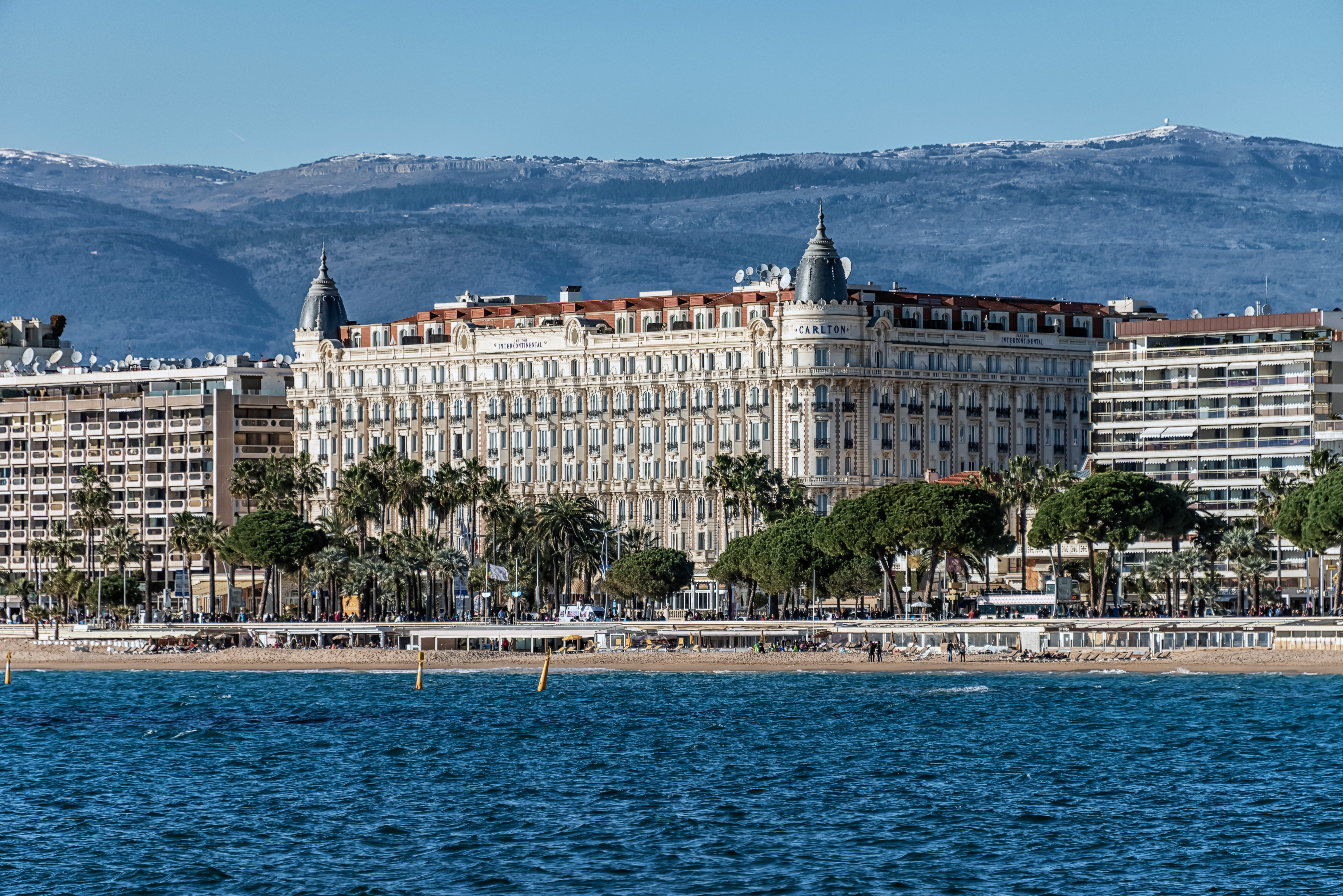
Begin with the Carlton, now Carlton Cannes, A Regent Hotel. No address on the Croisette carries more mythological weight, its twin Belle Époque domes framing the boulevard since 1913, and its recent renovation under Regent has given the legend a new generation of rooms and restaurants that finally match the facade. If Cannes has a front door, this is it, and the hotel knows it without needing to say so.
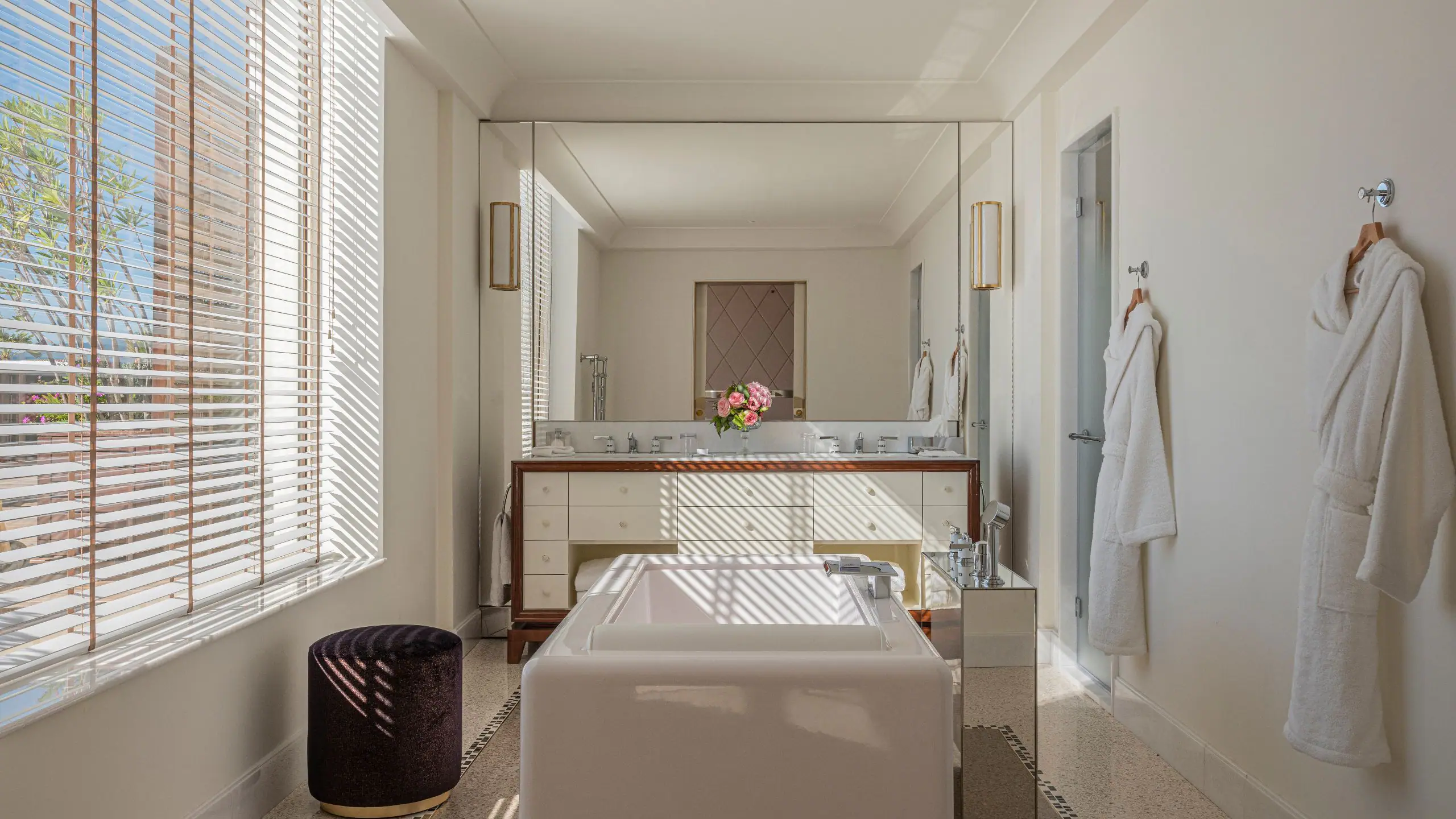
A few hundred meters east, the Hôtel Martinez is Cannes in concentrated form. The 1929 Art Deco palace has served as the backdrop to a century of festival arrivals, and today it operates as a self-contained Riviera world: the private beach club on the sand, the spa upstairs, penthouse suites that rank among the largest in Europe, and two Michelin stars glowing on the first floor. The Martinez does not perform glamour so much as inherit it.
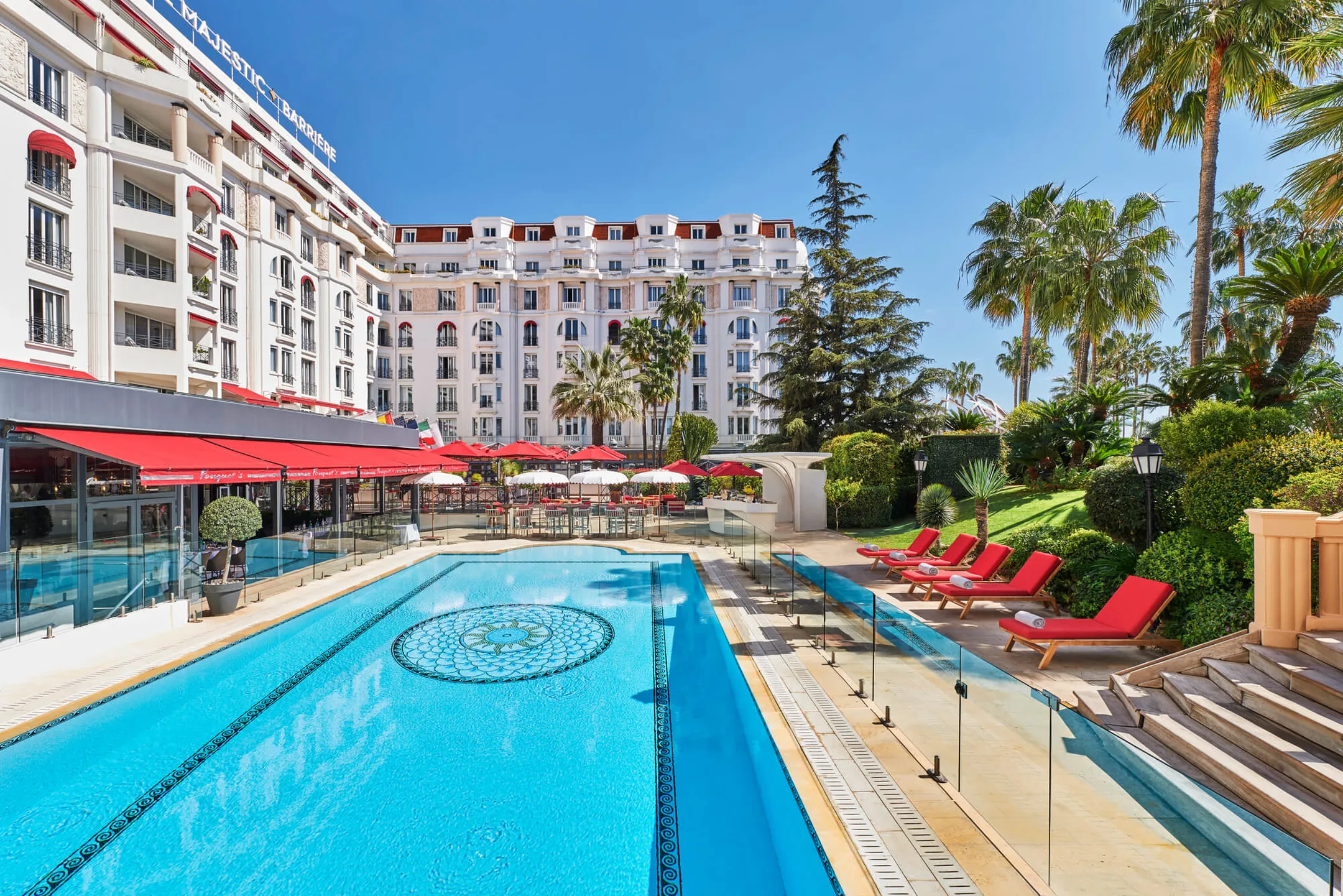
The Majestic Barrière is the operator's choice. Positioned at the Croisette's midpoint directly across from the Palais des Festivals, it is where the industry actually stays, dines, and closes deals, with a private beach club, serious restaurants, and world-class shopping wrapped around its base. If your trip to Cannes involves a lanyard or a term sheet, the Majestic's location is not a luxury but an efficiency.
For a different energy, the Mondrian Cannes arrived on the beachfront with attitude: bold interiors, a rooftop bar, and the Hyde Beach club, all calibrated for a younger luxury traveler who finds the palace circuit a little stately. It is the natural base for anyone whose Cannes runs later into the night than the gala schedule allows.
And then the Five Seas Hotel, the boutique correction to all that scale. Tucked near the old port with a rooftop pool, spacious suites, and personalized service, it trades the Croisette's spectacle for intimacy, and rewards the trade generously. It is the address for travelers who want Cannes at arm's length rather than in their lobby.
Cannes Dining
The dining follows a similar logic, split between the stage of the Croisette and the substance of the hills and lanes behind it. La Palme d'Or, inside the Martinez, remains the city's singular fine-dining statement, holding two Michelin stars under chef Jean Imbert. The room has been reimagined as a vintage yacht crossed with a love letter to cinema, the menu written like a screenplay, and the cooking itself is seafood of uncommon precision: wild gamberoni, John Dory roasted over wood fire, lobster from a wine list counted among the finest in southern France. It is theatrical, and it earns the theater.
Ten minutes inland in Le Cannet, La Villa Archange offers the counterargument. Bruno Oger has held two Michelin stars inside an eighteenth-century Provençal villa, producing seafood cookery that makes visitors rearrange schedules to return. Where La Palme d'Or performs Cannes, Villa Archange retreats from it, and the contrast is the point.
Back on the Croisette, Fouquet's Cannes at the Majestic is where the city makes its decisions. The famous brasserie carries a menu by Pierre Gagnaire and a dining room reliably full of people who are also closing something. It is less a restaurant than a working annex of the festival economy, and no visit to professional Cannes is complete without a meal there.
Up in Le Suquet, the medieval quarter above the old port, Table 22 par Noël Mantel represents where locals will tell you the food actually lives. The hilltop lanes hold the city's most honest kitchens, and Mantel's mastery of classical French technique has made his table a fixture of the Michelin Guide and a pilgrimage for anyone who wants Cannes without the choreography.
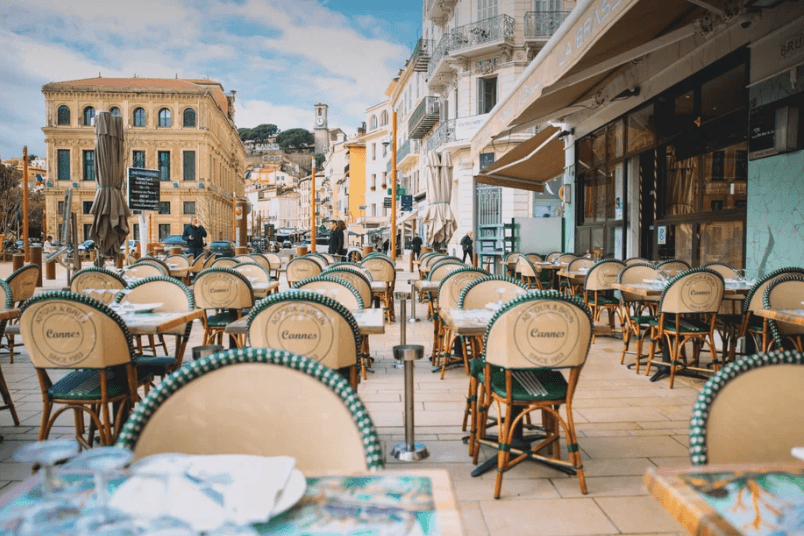
Finally, Astoux et Brun, the seafood institution near the harbor that has never once tried to be fashionable, which is precisely its strength. Platters of impeccably fresh shellfish, a dining room that feels alive without chaos, and a local clientele that returns week after week. It is proof that in a city built on spectacle, the most durable luxury is consistency.
What unites the ten is a lesson bigger than Cannes: the places that endure here are the ones that understand exactly which version of the city they are selling, the stage or the substance, and commit to it completely. So when you find yourself on the Croisette, the only real question is the one every guest must answer for themselves: which Cannes did you come for?
The film festival built the myth, but the infrastructure underneath it, the palace hotels, the beach clubs, the kitchens tucked into the medieval lanes of Le Suquet, runs at full sophistication for the other fifty weeks of the year. For anyone who works in brands, events, or hospitality, Cannes is less a vacation stop than a case study in how a small city sustains an outsized reputation. Here is where to stay and where to eat, chosen not for nostalgia but for what each place delivers right now.
Begin with the Carlton, now Carlton Cannes, A Regent Hotel. No address on the Croisette carries more mythological weight, its twin Belle Époque domes framing the boulevard since 1913, and its recent renovation under Regent has given the legend a new generation of rooms and restaurants that finally match the facade. If Cannes has a front door, this is it, and the hotel knows it without needing to say so.
A few hundred meters east, the Hôtel Martinez is Cannes in concentrated form. The 1929 Art Deco palace has served as the backdrop to a century of festival arrivals, and today it operates as a self-contained Riviera world: the private beach club on the sand, the spa upstairs, penthouse suites that rank among the largest in Europe, and two Michelin stars glowing on the first floor. The Martinez does not perform glamour so much as inherit it.
The Majestic Barrière is the operator's choice. Positioned at the Croisette's midpoint directly across from the Palais des Festivals, it is where the industry actually stays, dines, and closes deals, with a private beach club, serious restaurants, and world-class shopping wrapped around its base. If your trip to Cannes involves a lanyard or a term sheet, the Majestic's location is not a luxury but an efficiency.
For a different energy, the Mondrian Cannes arrived on the beachfront with attitude: bold interiors, a rooftop bar, and the Hyde Beach club, all calibrated for a younger luxury traveler who finds the palace circuit a little stately. It is the natural base for anyone whose Cannes runs later into the night than the gala schedule allows.
And then the Five Seas Hotel, the boutique correction to all that scale. Tucked near the old port with a rooftop pool, spacious suites, and personalized service, it trades the Croisette's spectacle for intimacy, and rewards the trade generously. It is the address for travelers who want Cannes at arm's length rather than in their lobby.
Cannes Dining
The dining follows a similar logic, split between the stage of the Croisette and the substance of the hills and lanes behind it. La Palme d'Or, inside the Martinez, remains the city's singular fine-dining statement, holding two Michelin stars under chef Jean Imbert. The room has been reimagined as a vintage yacht crossed with a love letter to cinema, the menu written like a screenplay, and the cooking itself is seafood of uncommon precision: wild gamberoni, John Dory roasted over wood fire, lobster from a wine list counted among the finest in southern France. It is theatrical, and it earns the theater.
Ten minutes inland in Le Cannet, La Villa Archange offers the counterargument. Bruno Oger has held two Michelin stars inside an eighteenth-century Provençal villa, producing seafood cookery that makes visitors rearrange schedules to return. Where La Palme d'Or performs Cannes, Villa Archange retreats from it, and the contrast is the point.
Back on the Croisette, Fouquet's Cannes at the Majestic is where the city makes its decisions. The famous brasserie carries a menu by Pierre Gagnaire and a dining room reliably full of people who are also closing something. It is less a restaurant than a working annex of the festival economy, and no visit to professional Cannes is complete without a meal there.
Up in Le Suquet, the medieval quarter above the old port, Table 22 par Noël Mantel represents where locals will tell you the food actually lives. The hilltop lanes hold the city's most honest kitchens, and Mantel's mastery of classical French technique has made his table a fixture of the Michelin Guide and a pilgrimage for anyone who wants Cannes without the choreography.
Finally, Astoux et Brun, the seafood institution near the harbor that has never once tried to be fashionable, which is precisely its strength. Platters of impeccably fresh shellfish, a dining room that feels alive without chaos, and a local clientele that returns week after week. It is proof that in a city built on spectacle, the most durable luxury is consistency.
What unites the ten is a lesson bigger than Cannes: the places that endure here are the ones that understand exactly which version of the city they are selling, the stage or the substance, and commit to it completely. So when you find yourself on the Croisette, the only real question is the one every guest must answer for themselves: which Cannes did you come for?
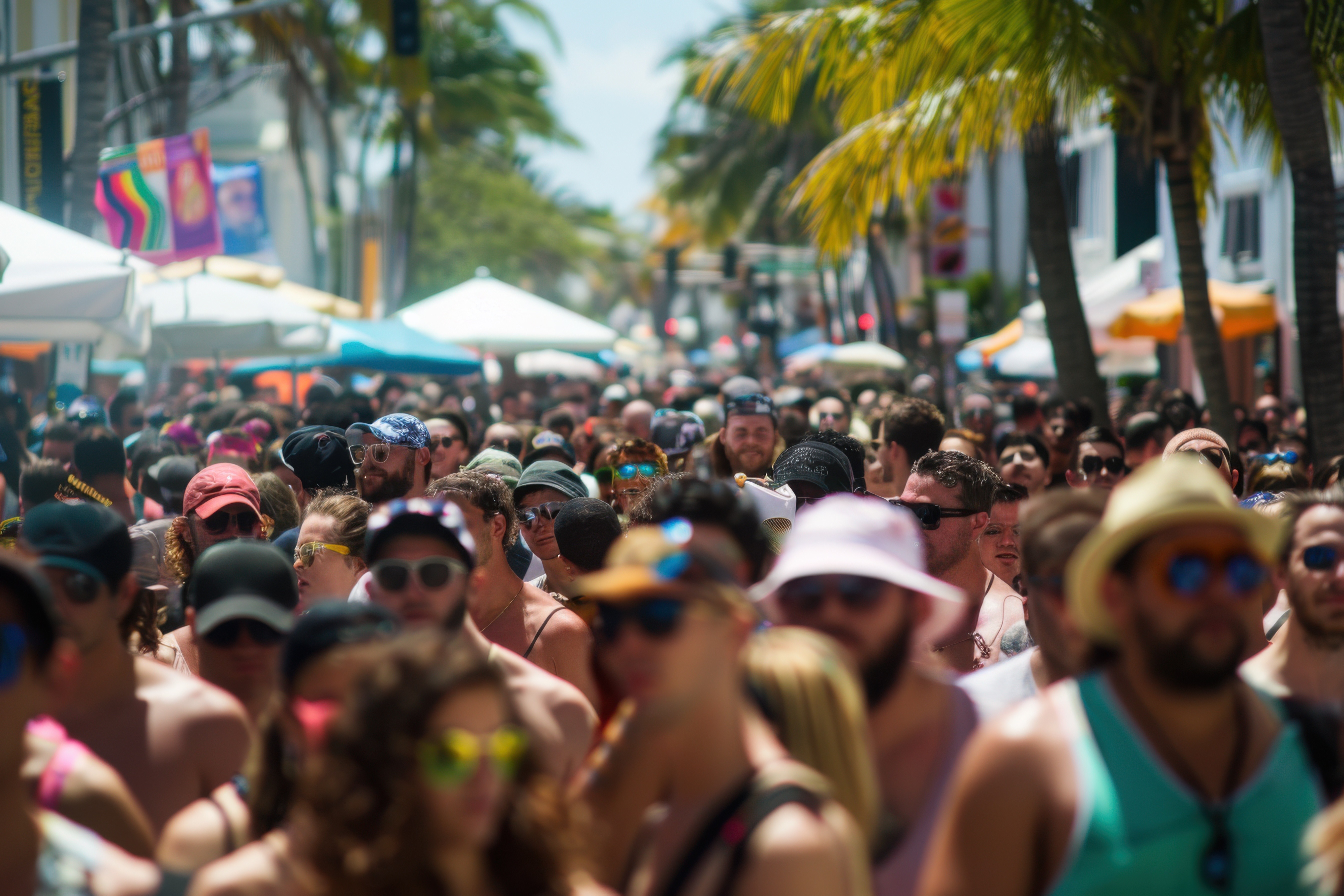
The film festival built the myth, but the infrastructure underneath it, the palace hotels, the beach clubs, the kitchens tucked into the medieval lanes of Le Suquet, runs at full sophistication for the other fifty weeks of the year. For anyone who works in brands, events, or hospitality, Cannes is less a vacation stop than a case study in how a small city sustains an outsized reputation. Here is where to stay and where to eat, chosen not for nostalgia but for what each place delivers right now.
Begin with the Carlton, now Carlton Cannes, A Regent Hotel. No address on the Croisette carries more mythological weight, its twin Belle Époque domes framing the boulevard since 1913, and its recent renovation under Regent has given the legend a new generation of rooms and restaurants that finally match the facade. If Cannes has a front door, this is it, and the hotel knows it without needing to say so.
A few hundred meters east, the Hôtel Martinez is Cannes in concentrated form. The 1929 Art Deco palace has served as the backdrop to a century of festival arrivals, and today it operates as a self-contained Riviera world: the private beach club on the sand, the spa upstairs, penthouse suites that rank among the largest in Europe, and two Michelin stars glowing on the first floor. The Martinez does not perform glamour so much as inherit it.
The Majestic Barrière is the operator's choice. Positioned at the Croisette's midpoint directly across from the Palais des Festivals, it is where the industry actually stays, dines, and closes deals, with a private beach club, serious restaurants, and world-class shopping wrapped around its base. If your trip to Cannes involves a lanyard or a term sheet, the Majestic's location is not a luxury but an efficiency.
For a different energy, the Mondrian Cannes arrived on the beachfront with attitude: bold interiors, a rooftop bar, and the Hyde Beach club, all calibrated for a younger luxury traveler who finds the palace circuit a little stately. It is the natural base for anyone whose Cannes runs later into the night than the gala schedule allows.
And then the Five Seas Hotel, the boutique correction to all that scale. Tucked near the old port with a rooftop pool, spacious suites, and personalized service, it trades the Croisette's spectacle for intimacy, and rewards the trade generously. It is the address for travelers who want Cannes at arm's length rather than in their lobby.
Cannes Dining
The dining follows a similar logic, split between the stage of the Croisette and the substance of the hills and lanes behind it. La Palme d'Or, inside the Martinez, remains the city's singular fine-dining statement, holding two Michelin stars under chef Jean Imbert. The room has been reimagined as a vintage yacht crossed with a love letter to cinema, the menu written like a screenplay, and the cooking itself is seafood of uncommon precision: wild gamberoni, John Dory roasted over wood fire, lobster from a wine list counted among the finest in southern France. It is theatrical, and it earns the theater.
Ten minutes inland in Le Cannet, La Villa Archange offers the counterargument. Bruno Oger has held two Michelin stars inside an eighteenth-century Provençal villa, producing seafood cookery that makes visitors rearrange schedules to return. Where La Palme d'Or performs Cannes, Villa Archange retreats from it, and the contrast is the point.
Back on the Croisette, Fouquet's Cannes at the Majestic is where the city makes its decisions. The famous brasserie carries a menu by Pierre Gagnaire and a dining room reliably full of people who are also closing something. It is less a restaurant than a working annex of the festival economy, and no visit to professional Cannes is complete without a meal there.
Up in Le Suquet, the medieval quarter above the old port, Table 22 par Noël Mantel represents where locals will tell you the food actually lives. The hilltop lanes hold the city's most honest kitchens, and Mantel's mastery of classical French technique has made his table a fixture of the Michelin Guide and a pilgrimage for anyone who wants Cannes without the choreography.
Finally, Astoux et Brun, the seafood institution near the harbor that has never once tried to be fashionable, which is precisely its strength. Platters of impeccably fresh shellfish, a dining room that feels alive without chaos, and a local clientele that returns week after week. It is proof that in a city built on spectacle, the most durable luxury is consistency.
What unites the ten is a lesson bigger than Cannes: the places that endure here are the ones that understand exactly which version of the city they are selling, the stage or the substance, and commit to it completely. So when you find yourself on the Croisette, the only real question is the one every guest must answer for themselves: which Cannes did you come for?
4 min read