Art Basel Paris 2026: L’Art de Vivre

In 1905, the Salon d'Automne hung Matisse and Derain inside the Grand Palais, and a critic dismissed them as fauves, wild beasts. The name stuck, and so did the idea that this building was where Paris decided what art would become.

When Art Basel took over the Grand Palais slot from FIAC in 2022, the move was read as a takeover. Four years later it reads more like a homecoming. From October 23 to 25, the fair returns for its fifth edition under the glass vault of the Grand Palais, and the city around it has rearranged itself accordingly.

This is the first edition under Karim Crippa, appointed director in October 2025. It brings together 206 galleries from 41 countries and territories, 65 of them with spaces in France. And it lands at a moment when the French market has momentum: Art Basel and UBS put sales in France at $4.5 billion in 2025, up 9 percent, making the country the fourth-largest art market in the world.

London still opens the autumn with Frieze. Paris, increasingly, is where the season is decided.


Inside the Grand Palais

The fair is organised in three sectors, and each tells you something about the city it sits in.

Galeries is the main floor beneath the Nave, where more than 170 returning exhibitors, from Hauser & Wirth to Galerie Buchholz and Sultana, show the full breadth of their programmes. The structural novelty this year is collaboration: a record 12 joint booths, including Michael Rosenfeld Gallery and Jeffrey Deitch pairing Beauford Delaney with Alteronce Gumby. Galleries pooling artists and audiences, rather than competing for the same collector, is a quiet sign of how the market is working in 2026.

Emergence occupies the balconies above the Nave with 16 solo booths, 12 from galleries showing at the fair for the first time. Many of the works were made for the occasion: Clémentine Adou's sculptural installations at Lo Brutto Stahl, built from materials gathered on Paris pavements, Drake Carr's large paintings at Mariposa, and Cudelice Brazelton IV's assemblages of iron, rust, denim and faux leather at Wschód. It is the best place in the building to see what the next decade might look like.

Premise is the most Parisian part of the fair. Launched in 2024, it is one of the few Art Basel sectors that allows work made before 1900, and it has grown to a dozen booths. The roster reads like a corrective to the canon: Tarsila do Amaral at Almeida & Dale, Farid Belkahia at Le Violon Bleu, El Anatsui alongside Uche Okeke and Obiora Udechukwu at kó, the Surrealist Jacqueline Lamba at Pavec, and computer-art pioneer Vera Molnár at Galerie Zlotowski. Even the graffiti generation gets its historical due, with Futura at Danysz.

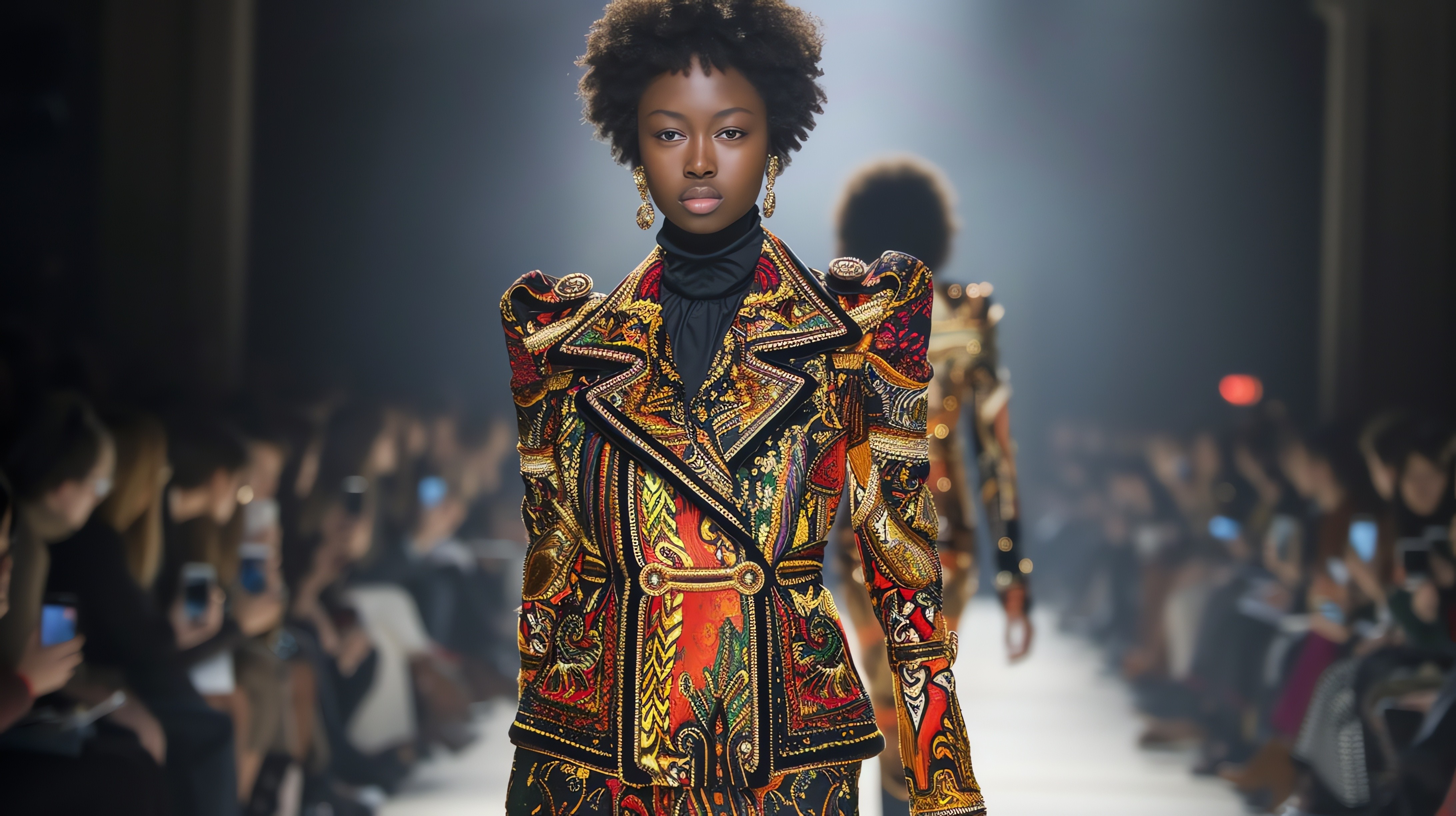
The programme around the booths leans firmly toward fashion. Edward Enninful guest-curates a day of the Conversations talks in the Grand Palais auditorium, and documentary maker Loïc Prigent leads Oh La La!, the fair's signature rehang, on October 23 and 24. Miu Miu returns as official partner of the public programme. In Paris, the line between the art world and the fashion world has never been especially firm, and the fair has stopped pretending otherwise.

The city as exhibition

Art Basel Paris works because Paris does most of the heavy lifting. During fair week, the city effectively becomes a second, much larger fair, and much of it is free.

The public programme. Exhibitions and installations spread across nine sites in the city centre, including the Palais d'Iéna and Avenue Winston-Churchill, which runs between the Grand Palais and the Petit Palais and fills with sculpture each October. It is open to anyone walking past, which in this part of Paris means a great many people.

The institutions. The Musée d'Orsay, the Musée Picasso and the Fondation Louis Vuitton all time major exhibitions to fair week, and the city's private foundations bring their own openings. Collectors plan their week around these as carefully as around the fair itself.

The satellites. Asia Now returns to the Monnaie de Paris for its 12th edition from October 20 to 24, with more than 50 galleries and 150 artists under the theme "Sentimental Value". Smaller fairs, gallery-district openings in the Marais and Belleville, and late-night dinners fill the remaining hours.

The quiet days. Before any of it opens to the public, there is Avant-Première on October 20, an invitation-only preview for exhibitors and their most important clients, now in its second year. Then come two Preview Days on October 21 and 22. By the time ticket holders arrive on Friday morning, a meaningful share of the serious business has already been done.

Who comes, and why Paris

The audience at Art Basel Paris is the global collecting class, but with a particular accent. American and Asian collectors fly in. European foundations send their directors. And the Paris-based houses of fashion, luxury and design treat the week as part of their own calendar.

That overlap is the fair's real advantage over London. Frieze sells art. Paris sells art in a city where Miu Miu sponsors the public programme, where Edward Enninful programmes a day of talks, and where a rehang is entrusted to a fashion documentarian. For brands, this is one of very few weeks a year when the people who buy art and the people who set taste are in the same rooms, on the same dinner lists.

The gallery map has shifted accordingly. More than 60 exhibitors now operate spaces in France, and several international galleries have opened or expanded in Paris since the fair arrived. The fair's structure rewards them: Premise in particular favours the scholarly, historically minded programmes that Parisian dealers have always done well.

There is also the matter of setting. The restored Grand Palais, with its 1900 iron-and-glass Nave, gives the fair something no convention centre can. It makes the work look important before anyone has read a label.

If you go

The Grand Palais sits on Avenue Winston-Churchill in the 8th arrondissement. Tickets are sold online through Art Basel, and certain pass holders also get free entry to the fair's cultural partners across the city.

Date

What happens

Tuesday, October 20

Avant-Première (invitation only)

Wednesday, October 21 to Thursday, October 22

Preview Days (invitation only)

Thursday, October 22, 2pm to 8pm

Public Vernissage

Friday, October 23 to Sunday, October 25, 11am to 7pm

Public days

Day tickets cost €45, or €30 reduced. Go on Friday morning if you want space to look, and Sunday afternoon if you want to see what sold.

Five editions in, Art Basel Paris no longer needs to justify itself. It has the building, the galleries and the city. This year, with a new director and a programme that openly courts fashion, it is making a confident case that the old role of the Salon has returned to the building that housed it. Paris is once again where reputations are made.


Art Basel Paris 2026: L’Art de Vivre

In 1905, the Salon d'Automne hung Matisse and Derain inside the Grand Palais, and a critic dismissed them as fauves, wild beasts. The name stuck, and so did the idea that this building was where Paris decided what art would become.

When Art Basel took over the Grand Palais slot from FIAC in 2022, the move was read as a takeover. Four years later it reads more like a homecoming. From October 23 to 25, the fair returns for its fifth edition under the glass vault of the Grand Palais, and the city around it has rearranged itself accordingly.

This is the first edition under Karim Crippa, appointed director in October 2025. It brings together 206 galleries from 41 countries and territories, 65 of them with spaces in France. And it lands at a moment when the French market has momentum: Art Basel and UBS put sales in France at $4.5 billion in 2025, up 9 percent, making the country the fourth-largest art market in the world.

London still opens the autumn with Frieze. Paris, increasingly, is where the season is decided.


Inside the Grand Palais

The fair is organised in three sectors, and each tells you something about the city it sits in.

Galeries is the main floor beneath the Nave, where more than 170 returning exhibitors, from Hauser & Wirth to Galerie Buchholz and Sultana, show the full breadth of their programmes. The structural novelty this year is collaboration: a record 12 joint booths, including Michael Rosenfeld Gallery and Jeffrey Deitch pairing Beauford Delaney with Alteronce Gumby. Galleries pooling artists and audiences, rather than competing for the same collector, is a quiet sign of how the market is working in 2026.

Emergence occupies the balconies above the Nave with 16 solo booths, 12 from galleries showing at the fair for the first time. Many of the works were made for the occasion: Clémentine Adou's sculptural installations at Lo Brutto Stahl, built from materials gathered on Paris pavements, Drake Carr's large paintings at Mariposa, and Cudelice Brazelton IV's assemblages of iron, rust, denim and faux leather at Wschód. It is the best place in the building to see what the next decade might look like.

Premise is the most Parisian part of the fair. Launched in 2024, it is one of the few Art Basel sectors that allows work made before 1900, and it has grown to a dozen booths. The roster reads like a corrective to the canon: Tarsila do Amaral at Almeida & Dale, Farid Belkahia at Le Violon Bleu, El Anatsui alongside Uche Okeke and Obiora Udechukwu at kó, the Surrealist Jacqueline Lamba at Pavec, and computer-art pioneer Vera Molnár at Galerie Zlotowski. Even the graffiti generation gets its historical due, with Futura at Danysz.

The programme around the booths leans firmly toward fashion. Edward Enninful guest-curates a day of the Conversations talks in the Grand Palais auditorium, and documentary maker Loïc Prigent leads Oh La La!, the fair's signature rehang, on October 23 and 24. Miu Miu returns as official partner of the public programme. In Paris, the line between the art world and the fashion world has never been especially firm, and the fair has stopped pretending otherwise.

The city as exhibition

Art Basel Paris works because Paris does most of the heavy lifting. During fair week, the city effectively becomes a second, much larger fair, and much of it is free.

The public programme. Exhibitions and installations spread across nine sites in the city centre, including the Palais d'Iéna and Avenue Winston-Churchill, which runs between the Grand Palais and the Petit Palais and fills with sculpture each October. It is open to anyone walking past, which in this part of Paris means a great many people.

The institutions. The Musée d'Orsay, the Musée Picasso and the Fondation Louis Vuitton all time major exhibitions to fair week, and the city's private foundations bring their own openings. Collectors plan their week around these as carefully as around the fair itself.

The satellites. Asia Now returns to the Monnaie de Paris for its 12th edition from October 20 to 24, with more than 50 galleries and 150 artists under the theme "Sentimental Value". Smaller fairs, gallery-district openings in the Marais and Belleville, and late-night dinners fill the remaining hours.

The quiet days. Before any of it opens to the public, there is Avant-Première on October 20, an invitation-only preview for exhibitors and their most important clients, now in its second year. Then come two Preview Days on October 21 and 22. By the time ticket holders arrive on Friday morning, a meaningful share of the serious business has already been done.

Who comes, and why Paris

The audience at Art Basel Paris is the global collecting class, but with a particular accent. American and Asian collectors fly in. European foundations send their directors. And the Paris-based houses of fashion, luxury and design treat the week as part of their own calendar.

That overlap is the fair's real advantage over London. Frieze sells art. Paris sells art in a city where Miu Miu sponsors the public programme, where Edward Enninful programmes a day of talks, and where a rehang is entrusted to a fashion documentarian. For brands, this is one of very few weeks a year when the people who buy art and the people who set taste are in the same rooms, on the same dinner lists.

The gallery map has shifted accordingly. More than 60 exhibitors now operate spaces in France, and several international galleries have opened or expanded in Paris since the fair arrived. The fair's structure rewards them: Premise in particular favours the scholarly, historically minded programmes that Parisian dealers have always done well.

There is also the matter of setting. The restored Grand Palais, with its 1900 iron-and-glass Nave, gives the fair something no convention centre can. It makes the work look important before anyone has read a label.

If you go

The Grand Palais sits on Avenue Winston-Churchill in the 8th arrondissement. Tickets are sold online through Art Basel, and certain pass holders also get free entry to the fair's cultural partners across the city.

Date

What happens

Tuesday, October 20

Avant-Première (invitation only)

Wednesday, October 21 to Thursday, October 22

Preview Days (invitation only)

Thursday, October 22, 2pm to 8pm

Public Vernissage

Friday, October 23 to Sunday, October 25, 11am to 7pm

Public days

Day tickets cost €45, or €30 reduced. Go on Friday morning if you want space to look, and Sunday afternoon if you want to see what sold.

Five editions in, Art Basel Paris no longer needs to justify itself. It has the building, the galleries and the city. This year, with a new director and a programme that openly courts fashion, it is making a confident case that the old role of the Salon has returned to the building that housed it. Paris is once again where reputations are made.


Art Basel Paris 2026: L’Art de Vivre

In 1905, the Salon d'Automne hung Matisse and Derain inside the Grand Palais, and a critic dismissed them as fauves, wild beasts. The name stuck, and so did the idea that this building was where Paris decided what art would become.

When Art Basel took over the Grand Palais slot from FIAC in 2022, the move was read as a takeover. Four years later it reads more like a homecoming. From October 23 to 25, the fair returns for its fifth edition under the glass vault of the Grand Palais, and the city around it has rearranged itself accordingly.

This is the first edition under Karim Crippa, appointed director in October 2025. It brings together 206 galleries from 41 countries and territories, 65 of them with spaces in France. And it lands at a moment when the French market has momentum: Art Basel and UBS put sales in France at $4.5 billion in 2025, up 9 percent, making the country the fourth-largest art market in the world.

London still opens the autumn with Frieze. Paris, increasingly, is where the season is decided.


Inside the Grand Palais

The fair is organised in three sectors, and each tells you something about the city it sits in.

Galeries is the main floor beneath the Nave, where more than 170 returning exhibitors, from Hauser & Wirth to Galerie Buchholz and Sultana, show the full breadth of their programmes. The structural novelty this year is collaboration: a record 12 joint booths, including Michael Rosenfeld Gallery and Jeffrey Deitch pairing Beauford Delaney with Alteronce Gumby. Galleries pooling artists and audiences, rather than competing for the same collector, is a quiet sign of how the market is working in 2026.

Emergence occupies the balconies above the Nave with 16 solo booths, 12 from galleries showing at the fair for the first time. Many of the works were made for the occasion: Clémentine Adou's sculptural installations at Lo Brutto Stahl, built from materials gathered on Paris pavements, Drake Carr's large paintings at Mariposa, and Cudelice Brazelton IV's assemblages of iron, rust, denim and faux leather at Wschód. It is the best place in the building to see what the next decade might look like.

Premise is the most Parisian part of the fair. Launched in 2024, it is one of the few Art Basel sectors that allows work made before 1900, and it has grown to a dozen booths. The roster reads like a corrective to the canon: Tarsila do Amaral at Almeida & Dale, Farid Belkahia at Le Violon Bleu, El Anatsui alongside Uche Okeke and Obiora Udechukwu at kó, the Surrealist Jacqueline Lamba at Pavec, and computer-art pioneer Vera Molnár at Galerie Zlotowski. Even the graffiti generation gets its historical due, with Futura at Danysz.

The programme around the booths leans firmly toward fashion. Edward Enninful guest-curates a day of the Conversations talks in the Grand Palais auditorium, and documentary maker Loïc Prigent leads Oh La La!, the fair's signature rehang, on October 23 and 24. Miu Miu returns as official partner of the public programme. In Paris, the line between the art world and the fashion world has never been especially firm, and the fair has stopped pretending otherwise.

The city as exhibition

Art Basel Paris works because Paris does most of the heavy lifting. During fair week, the city effectively becomes a second, much larger fair, and much of it is free.

The public programme. Exhibitions and installations spread across nine sites in the city centre, including the Palais d'Iéna and Avenue Winston-Churchill, which runs between the Grand Palais and the Petit Palais and fills with sculpture each October. It is open to anyone walking past, which in this part of Paris means a great many people.

The institutions. The Musée d'Orsay, the Musée Picasso and the Fondation Louis Vuitton all time major exhibitions to fair week, and the city's private foundations bring their own openings. Collectors plan their week around these as carefully as around the fair itself.

The satellites. Asia Now returns to the Monnaie de Paris for its 12th edition from October 20 to 24, with more than 50 galleries and 150 artists under the theme "Sentimental Value". Smaller fairs, gallery-district openings in the Marais and Belleville, and late-night dinners fill the remaining hours.

The quiet days. Before any of it opens to the public, there is Avant-Première on October 20, an invitation-only preview for exhibitors and their most important clients, now in its second year. Then come two Preview Days on October 21 and 22. By the time ticket holders arrive on Friday morning, a meaningful share of the serious business has already been done.

Who comes, and why Paris

The audience at Art Basel Paris is the global collecting class, but with a particular accent. American and Asian collectors fly in. European foundations send their directors. And the Paris-based houses of fashion, luxury and design treat the week as part of their own calendar.

That overlap is the fair's real advantage over London. Frieze sells art. Paris sells art in a city where Miu Miu sponsors the public programme, where Edward Enninful programmes a day of talks, and where a rehang is entrusted to a fashion documentarian. For brands, this is one of very few weeks a year when the people who buy art and the people who set taste are in the same rooms, on the same dinner lists.

The gallery map has shifted accordingly. More than 60 exhibitors now operate spaces in France, and several international galleries have opened or expanded in Paris since the fair arrived. The fair's structure rewards them: Premise in particular favours the scholarly, historically minded programmes that Parisian dealers have always done well.

There is also the matter of setting. The restored Grand Palais, with its 1900 iron-and-glass Nave, gives the fair something no convention centre can. It makes the work look important before anyone has read a label.

If you go

The Grand Palais sits on Avenue Winston-Churchill in the 8th arrondissement. Tickets are sold online through Art Basel, and certain pass holders also get free entry to the fair's cultural partners across the city.

Date

What happens

Tuesday, October 20

Avant-Première (invitation only)

Wednesday, October 21 to Thursday, October 22

Preview Days (invitation only)

Thursday, October 22, 2pm to 8pm

Public Vernissage

Friday, October 23 to Sunday, October 25, 11am to 7pm

Public days

Day tickets cost €45, or €30 reduced. Go on Friday morning if you want space to look, and Sunday afternoon if you want to see what sold.

Five editions in, Art Basel Paris no longer needs to justify itself. It has the building, the galleries and the city. This year, with a new director and a programme that openly courts fashion, it is making a confident case that the old role of the Salon has returned to the building that housed it. Paris is once again where reputations are made.


6 min read

FLIBS 2026: The Superyacht Season Sets Sail

Every autumn, just before the Caribbean charter season opens, Fort Lauderdale stops being a city with a lot of boats and becomes a city organised around them. From October 28 to November 1, the Fort Lauderdale International Boat Show, known to everyone in the trade simply as FLIBS, takes over the waterfront for the 67th time.

The numbers have long since stopped needing introduction. More than 1,300 vessels, over 1,000 exhibitors and a visitor count north of 100,000, nearly half of whom travel in from outside Florida. What makes the show interesting is not the scale. It is the fact that, for five days, the people who build, sell, crew, finance and charter the world's superyachts are all within a shuttle ride of one another.

That proximity is the point. FLIBS is a trade show dressed as a waterfront festival, and the most consequential conversations rarely happen at a booth.

A city built for this

Few places could host a show like this. Fort Lauderdale's network of canals earned it the nickname "the Venice of America" long before anyone called it the Yachting Capital of the World. The show itself began in 1959 as a modest local showcase and grew, decade by decade, into the largest in-water boat show on the planet.

The industry behind it is substantial. The Marine Industries Association of South Florida, which owns the show, counts more than 500 member businesses across Broward, Miami-Dade and Palm Beach counties, and the regional marine economy supports some 142,000 jobs. Refit yards, brokers, provisioners, crew agencies and captains all call this stretch of coast home. FLIBS is, in effect, the week the whole ecosystem opens its doors at once.

The official show

Informa Markets produce FLIBS and runs Wednesday, October 28 through Sunday, November 1, across six official sites strung along the Intracoastal: Bahia Mar Yachting Center at the centre, with Las Olas Marina, Hall of Fame Marina, Pier Sixty-Six Marina, the Superyacht Village at Pier Sixty-Six South, and the Broward County Convention Center, which doubles as the show's transport hub.


The geography matters. Bahia Mar is the public heart of the show, where the brokerage fleet and the major production builders set up. The Superyacht Village is where the largest vessels berth alongside the toys that accompany them, from helicopters and personal submarines to collectible cars. The Convention Center handles the sportfishers, center consoles, diving gear and personal watercraft that keep the regional industry running, and it is where families find The Blue Wild ocean exhibits, the FLIBS Kids Corner and Don Dingman's "Hook the Future" fishing clinics, which send young anglers home with a rod and reel of their own.

The headline hull this year is unusual. Among the superyachts confirmed for the show is the 92.9-metre Oceanco Draak. Owned by Valve co-founder Gabe Newell, who also became majority owner of Oceanco itself in 2025, she has been rebuilt as a research and support companion to his 111-metre Leviathan, trading spas and lounges for cranes, dive equipment and decompression chambers. It is a fitting symbol of where the top of the market is heading: toward exploration, science and capability rather than pure leisure.

The fleet heads for the horizon

The charter debuts tell the same story. The largest newcomer is Scintilla Maris, a 45.6-metre former fishing trawler converted into an expedition yacht by Damen Maaskant, with interiors by Vripack and a range of some 9,000 nautical miles. Bering Yachts' Heeus carries a beach club and a sauna across a 5,000-mile range. Stellamar, a 35-metre Cantiere delle Marche with interiors by Francesco Paszkowski and a World Superyacht Award to her name, can cover 5,500 nautical miles between fuel stops.

Not every debut is built for the high latitudes. The 40-metre Mangusta Beachouse is an open-decked performance yacht designed for sunshine and speed, Westport's UnWined offers a shallow draft suited to the Bahamas banks, and Azimut's Penja pairs a Salvagni Architetti interior with a beach club and a floating pool. Further along the docks, the 60-metre Feadship Rock.It is the largest listed charter yacht expected at the show.

The commercial weight is considerable. Last year, roughly a third of the 187 yachts on show were available for charter, at average weekly rates above $152,000, and 444 crew were on hand to show guests what life aboard looks like. For charter brokers, FLIBS is the moment to lock in winter bookings before the fleet scatters to the Bahamas and the Caribbean.

Prizes and progress

FLIBS also hands out the trophies that builders quote in their brochures for the following year. The Best of Show award has gone to the Mangusta Oceano 50 and the Azimut Grande 36m in recent editions, and in 2024 the judges broke with tradition to name two winners. Alongside it, the Marine Research Hub Innovation and Sustainability Awards, now in their fourth year, recognise blue-green technology, sustainable design and conservation projects among the show's exhibitors.

The seminar programme runs in parallel, from general boating and fishing clinics to the RefitX series aimed at owners and captains planning major yard work. Refit is quietly one of South Florida's biggest marine businesses, and these sessions are where many of next year's projects begin.

The economic case is made without much modesty. Organisers put the show's annual impact at an estimated $1.79 billion, supporting more than 100,000 jobs across the region.

Off the docks

The show closes at 7pm most nights. Fort Lauderdale does not.

The Concours. Friday night belongs to the Fort Lauderdale Concours, the show's one genuinely social set piece. Classic cars, fashion, fine and pop art and live music are staged against the superyachts, with an open bar for those who bought the add-on to a Windward VIP ticket. It is where the boat crowd and the car crowd overlap, and it is the closest FLIBS comes to a Monaco evening.

The VIP geography has shifted. The Windward VIP Club stays at Superyacht Village, but its second outpost, the Cabana Club, has moved to Bahia Mar. Chefs Ryan O'Sullivan of Hell's Kitchen and Dave White of Below Deck cook across both. Nearby, Goslings Island Bar returns to the water between Docks C and D, serving the show's official rum. Expect the cabana to become the show's unofficial meeting room.

The crew economy. The most telling addition this year is a floating pickleball court at Las Olas Marina, with a tournament open only to yacht crew. Crew are the show's invisible workforce and, increasingly, its most connected audience. They know which owners are buying, which captains are moving and which yards are behind schedule. A space built for them is a small signal that the industry has noticed.

The brokerage circuit. Much of the real business at FLIBS runs on appointment. The large brokerage houses arrive with curated yacht lists, private viewings and their own partner events, several of which are only announced to clients. Superyacht Village has also traditionally hosted an evening chef competition for yacht cooks, one of the few places where onboard talent is on display.

The city as venue. Show week fills Fort Lauderdale's beachfront hotels, from the redeveloped Pier Sixty-Six to the Conrad, the W and the Ritz-Carlton, and the Las Olas dining strip runs at full tilt. The aft deck dinners, broker cocktails and owner receptions that happen in and around those addresses are where FLIBS does much of its deciding.

Who shows up, and why it matters

FLIBS draws an audience that is unusually hard to find in one place. Owners and buyers. Captains and crew. Shipyards from the Netherlands, Italy and Turkey. Charter brokers, designers, financiers and the service economy that keeps a superyacht running. Nearly half arrive from outside Florida.

For brands outside marine, that mix is the opportunity. Luxury automotive already treats the show as home turf through the Concours. Spirits, fashion, watches, wellness and private aviation sit naturally beside it. The brands that do well at FLIBS tend to show up where the conversations happen, at the cabana, on the aft deck, at the Friday night event, rather than at the end of a long dock.

The show is also a calendar signal. It follows the Monaco Yacht Show by a month and hands the season over to the Caribbean charter shows in December. Closer to home, it sets the tone for the South Florida run that continues through Art Basel Miami Beach and on to the Miami and Palm Beach boat shows in spring. What is said on the docks in Fort Lauderdale tends to echo for months.

If you go

Tickets are sold online only at flibs.com, with no box office on site. Wednesday is the preview day and the quietest on the docks, which makes it the best day for serious viewing. Active military members and veterans can request a complimentary general admission ticket for Sunday.

Day

Hours

Wednesday, October 28 (preview)

12pm to 7pm

Thursday, October 29 to Saturday, October 31

10am to 7pm

Sunday, November 1

10am to 5pm

Ticket

Price

Adult one-day general admission (Thu to Sun)

$48

Adult two-day general admission (Thu to Sun)

$80

Wednesday preview (any one day)

$73

Windward VIP Experience (one day)

$459

Parking at the Convention Center is a flat $40 a day, and from there shuttles and golf carts link the sites free of charge. The water taxi runs $15 a day and is the most scenic way between marinas, while Brightline is the easiest way in from Palm Beach or Miami. Book hotels early: show week is the peak of Fort Lauderdale's year.

FLIBS will always be sold on its boats. But the most valuable hours of the week happen between the docks, after the gates close, in the rooms most visitors never see. That is the show worth showing up for.

8 min read

The Infrastructure of Attention

That is not the story the industry likes to tell about itself. The show floor still sells the visible layer: the headset demo, the projection-mapped tunnel, the drone swarm drawing a logo over a stadium. But the ambition, and increasingly the budget, has moved backstage, into the systems that decide who gets in, what gets programmed, and what happens to the content once the house lights come up.

The money is real, if still modest. Grand View Research sizes the immersive segment of events and experiential at roughly $1.9 billion in 2024, rising to about $9.3 billion by 2030. The more telling signal is in how events are now made. In American Express Global Business Travel's latest Meetings and Events Forecast, half of planners said AI now runs through their work from planning to execution. It has moved from a feature in the attendee app to part of the production desk.

The backstage layer

Five shifts carry most of the change.

Attendee intelligence. Badge scans, session check-ins, and app behavior now feed platforms that show organizers an event as it unfolds: which rooms are overflowing, which halls are dead, where the coffee queue is breaking. The best producers treat this as a live instrument, adjusting programming and flow on the day rather than filing a report a month later.

Pre-testing. Coca-Cola offers the clearest case. Working with Reach3 Insights, the company adopted the Brand Experience Predictor, a research tool that gauges consumer response to an activation before it is built, captures reactions on site, and recontacts attendees afterward. Coke's measurement team presented the approach at the ARF's Audience x Science conference in 2025, describing how findings from the first year of a large festival program shaped a bigger presence in the second. The principle is overdue in this industry: test the concept before committing the budget, not after.

Identity at the door. Airports have conditioned the public to venues. IATA's 2025 Global Passenger Survey found that half of travelers have used biometrics somewhere in their airport journey, and the vast majority were satisfied. Arenas and stadiums are following with face-based entry and payment. The friction removed at the gate goes unnoticed, which is precisely the point.

Content at the speed of the event. Generative tools have collapsed the distance between something happening and something being published. Recap reels, galleries, and personalized follow-ups that once arrived a week later now arrive the same evening. For many events, the content cycle has become part of the product.

Agents in operations. Hospitality is the bellwether. A 2026 study by the consultancy h2c found AI in use at nearly every hotel chain it surveyed, with AI agents among the top innovation priorities for the next two years. Event production is likely to follow along the same lines: vendor coordination, attendee communication, on-site logistics. The returns are early and largely unmeasured, and anyone quoting a precise cost saving is getting ahead of the evidence.

The measurement problem

The backstage layer has one conspicuous weakness, and it is the very thing it is supposed to be good at. Take the 2025 Cannes Film Festival. Karla Otto and the influencer platform Lefty reported that the festival's social footprint grew sharply year on year. Kolsquare, tracking a different window and a different set of signals, reported that Instagram value around the festival had fallen. Neither firm was necessarily wrong. They were measuring different things and calling both by the same name.

Until event metrics are as consistent as advertising metrics, the promise of the invisible layer will run ahead of its proof. The producers who win the next phase will be the ones who can show, credibly and comparably, what an experience actually did.

The visible layer

None of this means the spectacle is going away. AR and VR installations, projection mapping and drone shows remain fixtures of major activations. Drone shows in particular have displaced fireworks at a growing share of large brand and civic events, for reasons that are more operational than aesthetic: easier permitting, no debris or smoke, quieter skies and total control over the image in the air.

But the evidence base for the visible layer is thinner than its marketing suggests. The figure most often cited for VR's emotional pull, 27 percent higher engagement than a flat screen, comes from a 2016 Nielsen and YuMe lab study of 150 people watching the same clip on a headset and on a television. It is a decade old and measured something far narrower than a branded experience, yet it still circulates as if it were fresh.

The visible layer is easy to buy and easy to copy. That is the definition of a commodity.

What the screen cannot replace

The other lesson of the past five years is about where technology belongs. The wave of virtual-world brand activations that drew so much attention in 2021 and 2022 has largely receded, while the in-person programs running alongside them kept growing. Planners' own forecasts still treat the in-person gathering as the default format, with digital extending its reach rather than standing in for it.

Technology earns its place when it supports a human experience in a room. It loses ground when it tries to replace one.

The fringe test

The main stage at Cannes Lions, Art Basel or a fashion week is now heavily instrumented. The fringe around it is not. The dinners, salons, satellite talks and invitation-only rooms where much of the actual business of those weeks gets done still run largely on group chats, guest lists and word of mouth.

That is where the invisible layer will be tested next, and where its absence is felt most. For anyone trying to find the right room, discovery is the first piece of infrastructure. It is the territory the Frynge was built to cover.

The next phase

For brands and producers, the strategic implication is straightforward. Invest in the operational layer: attendee intelligence, pre-testing, frictionless entry, fast content and, cautiously, agents. Treat the drone show, the AR filter and the VR booth as finishing touches rather than strategy.

The visible technology is the cheap version. The invisible technology is the durable one. The brands building toward the latter are the ones the next decade will reward.

5 min read

Art Basel Paris 2026: L’Art de Vivre

In 1905, the Salon d'Automne hung Matisse and Derain inside the Grand Palais, and a critic dismissed them as fauves, wild beasts. The name stuck, and so did the idea that this building was where Paris decided what art would become.

When Art Basel took over the Grand Palais slot from FIAC in 2022, the move was read as a takeover. Four years later it reads more like a homecoming. From October 23 to 25, the fair returns for its fifth edition under the glass vault of the Grand Palais, and the city around it has rearranged itself accordingly.

This is the first edition under Karim Crippa, appointed director in October 2025. It brings together 206 galleries from 41 countries and territories, 65 of them with spaces in France. And it lands at a moment when the French market has momentum: Art Basel and UBS put sales in France at $4.5 billion in 2025, up 9 percent, making the country the fourth-largest art market in the world.

London still opens the autumn with Frieze. Paris, increasingly, is where the season is decided.


Inside the Grand Palais

The fair is organised in three sectors, and each tells you something about the city it sits in.

Galeries is the main floor beneath the Nave, where more than 170 returning exhibitors, from Hauser & Wirth to Galerie Buchholz and Sultana, show the full breadth of their programmes. The structural novelty this year is collaboration: a record 12 joint booths, including Michael Rosenfeld Gallery and Jeffrey Deitch pairing Beauford Delaney with Alteronce Gumby. Galleries pooling artists and audiences, rather than competing for the same collector, is a quiet sign of how the market is working in 2026.

Emergence occupies the balconies above the Nave with 16 solo booths, 12 from galleries showing at the fair for the first time. Many of the works were made for the occasion: Clémentine Adou's sculptural installations at Lo Brutto Stahl, built from materials gathered on Paris pavements, Drake Carr's large paintings at Mariposa, and Cudelice Brazelton IV's assemblages of iron, rust, denim and faux leather at Wschód. It is the best place in the building to see what the next decade might look like.

Premise is the most Parisian part of the fair. Launched in 2024, it is one of the few Art Basel sectors that allows work made before 1900, and it has grown to a dozen booths. The roster reads like a corrective to the canon: Tarsila do Amaral at Almeida & Dale, Farid Belkahia at Le Violon Bleu, El Anatsui alongside Uche Okeke and Obiora Udechukwu at kó, the Surrealist Jacqueline Lamba at Pavec, and computer-art pioneer Vera Molnár at Galerie Zlotowski. Even the graffiti generation gets its historical due, with Futura at Danysz.

The programme around the booths leans firmly toward fashion. Edward Enninful guest-curates a day of the Conversations talks in the Grand Palais auditorium, and documentary maker Loïc Prigent leads Oh La La!, the fair's signature rehang, on October 23 and 24. Miu Miu returns as official partner of the public programme. In Paris, the line between the art world and the fashion world has never been especially firm, and the fair has stopped pretending otherwise.

The city as exhibition

Art Basel Paris works because Paris does most of the heavy lifting. During fair week, the city effectively becomes a second, much larger fair, and much of it is free.

The public programme. Exhibitions and installations spread across nine sites in the city centre, including the Palais d'Iéna and Avenue Winston-Churchill, which runs between the Grand Palais and the Petit Palais and fills with sculpture each October. It is open to anyone walking past, which in this part of Paris means a great many people.

The institutions. The Musée d'Orsay, the Musée Picasso and the Fondation Louis Vuitton all time major exhibitions to fair week, and the city's private foundations bring their own openings. Collectors plan their week around these as carefully as around the fair itself.

The satellites. Asia Now returns to the Monnaie de Paris for its 12th edition from October 20 to 24, with more than 50 galleries and 150 artists under the theme "Sentimental Value". Smaller fairs, gallery-district openings in the Marais and Belleville, and late-night dinners fill the remaining hours.

The quiet days. Before any of it opens to the public, there is Avant-Première on October 20, an invitation-only preview for exhibitors and their most important clients, now in its second year. Then come two Preview Days on October 21 and 22. By the time ticket holders arrive on Friday morning, a meaningful share of the serious business has already been done.

Who comes, and why Paris

The audience at Art Basel Paris is the global collecting class, but with a particular accent. American and Asian collectors fly in. European foundations send their directors. And the Paris-based houses of fashion, luxury and design treat the week as part of their own calendar.

That overlap is the fair's real advantage over London. Frieze sells art. Paris sells art in a city where Miu Miu sponsors the public programme, where Edward Enninful programmes a day of talks, and where a rehang is entrusted to a fashion documentarian. For brands, this is one of very few weeks a year when the people who buy art and the people who set taste are in the same rooms, on the same dinner lists.

The gallery map has shifted accordingly. More than 60 exhibitors now operate spaces in France, and several international galleries have opened or expanded in Paris since the fair arrived. The fair's structure rewards them: Premise in particular favours the scholarly, historically minded programmes that Parisian dealers have always done well.

There is also the matter of setting. The restored Grand Palais, with its 1900 iron-and-glass Nave, gives the fair something no convention centre can. It makes the work look important before anyone has read a label.

If you go

The Grand Palais sits on Avenue Winston-Churchill in the 8th arrondissement. Tickets are sold online through Art Basel, and certain pass holders also get free entry to the fair's cultural partners across the city.

Date

What happens

Tuesday, October 20

Avant-Première (invitation only)

Wednesday, October 21 to Thursday, October 22

Preview Days (invitation only)

Thursday, October 22, 2pm to 8pm

Public Vernissage

Friday, October 23 to Sunday, October 25, 11am to 7pm

Public days

Day tickets cost €45, or €30 reduced. Go on Friday morning if you want space to look, and Sunday afternoon if you want to see what sold.

Five editions in, Art Basel Paris no longer needs to justify itself. It has the building, the galleries and the city. This year, with a new director and a programme that openly courts fashion, it is making a confident case that the old role of the Salon has returned to the building that housed it. Paris is once again where reputations are made.


FLIBS 2026: The Superyacht Season Sets Sail

Every autumn, just before the Caribbean charter season opens, Fort Lauderdale stops being a city with a lot of boats and becomes a city organised around them. From October 28 to November 1, the Fort Lauderdale International Boat Show, known to everyone in the trade simply as FLIBS, takes over the waterfront for the 67th time.

The numbers have long since stopped needing introduction. More than 1,300 vessels, over 1,000 exhibitors and a visitor count north of 100,000, nearly half of whom travel in from outside Florida. What makes the show interesting is not the scale. It is the fact that, for five days, the people who build, sell, crew, finance and charter the world's superyachts are all within a shuttle ride of one another.

That proximity is the point. FLIBS is a trade show dressed as a waterfront festival, and the most consequential conversations rarely happen at a booth.

A city built for this

Few places could host a show like this. Fort Lauderdale's network of canals earned it the nickname "the Venice of America" long before anyone called it the Yachting Capital of the World. The show itself began in 1959 as a modest local showcase and grew, decade by decade, into the largest in-water boat show on the planet.

The industry behind it is substantial. The Marine Industries Association of South Florida, which owns the show, counts more than 500 member businesses across Broward, Miami-Dade and Palm Beach counties, and the regional marine economy supports some 142,000 jobs. Refit yards, brokers, provisioners, crew agencies and captains all call this stretch of coast home. FLIBS is, in effect, the week the whole ecosystem opens its doors at once.

The official show

Informa Markets produce FLIBS and runs Wednesday, October 28 through Sunday, November 1, across six official sites strung along the Intracoastal: Bahia Mar Yachting Center at the centre, with Las Olas Marina, Hall of Fame Marina, Pier Sixty-Six Marina, the Superyacht Village at Pier Sixty-Six South, and the Broward County Convention Center, which doubles as the show's transport hub.


The geography matters. Bahia Mar is the public heart of the show, where the brokerage fleet and the major production builders set up. The Superyacht Village is where the largest vessels berth alongside the toys that accompany them, from helicopters and personal submarines to collectible cars. The Convention Center handles the sportfishers, center consoles, diving gear and personal watercraft that keep the regional industry running, and it is where families find The Blue Wild ocean exhibits, the FLIBS Kids Corner and Don Dingman's "Hook the Future" fishing clinics, which send young anglers home with a rod and reel of their own.

The headline hull this year is unusual. Among the superyachts confirmed for the show is the 92.9-metre Oceanco Draak. Owned by Valve co-founder Gabe Newell, who also became majority owner of Oceanco itself in 2025, she has been rebuilt as a research and support companion to his 111-metre Leviathan, trading spas and lounges for cranes, dive equipment and decompression chambers. It is a fitting symbol of where the top of the market is heading: toward exploration, science and capability rather than pure leisure.

The fleet heads for the horizon

The charter debuts tell the same story. The largest newcomer is Scintilla Maris, a 45.6-metre former fishing trawler converted into an expedition yacht by Damen Maaskant, with interiors by Vripack and a range of some 9,000 nautical miles. Bering Yachts' Heeus carries a beach club and a sauna across a 5,000-mile range. Stellamar, a 35-metre Cantiere delle Marche with interiors by Francesco Paszkowski and a World Superyacht Award to her name, can cover 5,500 nautical miles between fuel stops.

Not every debut is built for the high latitudes. The 40-metre Mangusta Beachouse is an open-decked performance yacht designed for sunshine and speed, Westport's UnWined offers a shallow draft suited to the Bahamas banks, and Azimut's Penja pairs a Salvagni Architetti interior with a beach club and a floating pool. Further along the docks, the 60-metre Feadship Rock.It is the largest listed charter yacht expected at the show.

The commercial weight is considerable. Last year, roughly a third of the 187 yachts on show were available for charter, at average weekly rates above $152,000, and 444 crew were on hand to show guests what life aboard looks like. For charter brokers, FLIBS is the moment to lock in winter bookings before the fleet scatters to the Bahamas and the Caribbean.

Prizes and progress

FLIBS also hands out the trophies that builders quote in their brochures for the following year. The Best of Show award has gone to the Mangusta Oceano 50 and the Azimut Grande 36m in recent editions, and in 2024 the judges broke with tradition to name two winners. Alongside it, the Marine Research Hub Innovation and Sustainability Awards, now in their fourth year, recognise blue-green technology, sustainable design and conservation projects among the show's exhibitors.

The seminar programme runs in parallel, from general boating and fishing clinics to the RefitX series aimed at owners and captains planning major yard work. Refit is quietly one of South Florida's biggest marine businesses, and these sessions are where many of next year's projects begin.

The economic case is made without much modesty. Organisers put the show's annual impact at an estimated $1.79 billion, supporting more than 100,000 jobs across the region.

Off the docks

The show closes at 7pm most nights. Fort Lauderdale does not.

The Concours. Friday night belongs to the Fort Lauderdale Concours, the show's one genuinely social set piece. Classic cars, fashion, fine and pop art and live music are staged against the superyachts, with an open bar for those who bought the add-on to a Windward VIP ticket. It is where the boat crowd and the car crowd overlap, and it is the closest FLIBS comes to a Monaco evening.

The VIP geography has shifted. The Windward VIP Club stays at Superyacht Village, but its second outpost, the Cabana Club, has moved to Bahia Mar. Chefs Ryan O'Sullivan of Hell's Kitchen and Dave White of Below Deck cook across both. Nearby, Goslings Island Bar returns to the water between Docks C and D, serving the show's official rum. Expect the cabana to become the show's unofficial meeting room.

The crew economy. The most telling addition this year is a floating pickleball court at Las Olas Marina, with a tournament open only to yacht crew. Crew are the show's invisible workforce and, increasingly, its most connected audience. They know which owners are buying, which captains are moving and which yards are behind schedule. A space built for them is a small signal that the industry has noticed.

The brokerage circuit. Much of the real business at FLIBS runs on appointment. The large brokerage houses arrive with curated yacht lists, private viewings and their own partner events, several of which are only announced to clients. Superyacht Village has also traditionally hosted an evening chef competition for yacht cooks, one of the few places where onboard talent is on display.

The city as venue. Show week fills Fort Lauderdale's beachfront hotels, from the redeveloped Pier Sixty-Six to the Conrad, the W and the Ritz-Carlton, and the Las Olas dining strip runs at full tilt. The aft deck dinners, broker cocktails and owner receptions that happen in and around those addresses are where FLIBS does much of its deciding.

Who shows up, and why it matters

FLIBS draws an audience that is unusually hard to find in one place. Owners and buyers. Captains and crew. Shipyards from the Netherlands, Italy and Turkey. Charter brokers, designers, financiers and the service economy that keeps a superyacht running. Nearly half arrive from outside Florida.

For brands outside marine, that mix is the opportunity. Luxury automotive already treats the show as home turf through the Concours. Spirits, fashion, watches, wellness and private aviation sit naturally beside it. The brands that do well at FLIBS tend to show up where the conversations happen, at the cabana, on the aft deck, at the Friday night event, rather than at the end of a long dock.

The show is also a calendar signal. It follows the Monaco Yacht Show by a month and hands the season over to the Caribbean charter shows in December. Closer to home, it sets the tone for the South Florida run that continues through Art Basel Miami Beach and on to the Miami and Palm Beach boat shows in spring. What is said on the docks in Fort Lauderdale tends to echo for months.

If you go

Tickets are sold online only at flibs.com, with no box office on site. Wednesday is the preview day and the quietest on the docks, which makes it the best day for serious viewing. Active military members and veterans can request a complimentary general admission ticket for Sunday.

Day

Hours

Wednesday, October 28 (preview)

12pm to 7pm

Thursday, October 29 to Saturday, October 31

10am to 7pm

Sunday, November 1

10am to 5pm

Ticket

Price

Adult one-day general admission (Thu to Sun)

$48

Adult two-day general admission (Thu to Sun)

$80

Wednesday preview (any one day)

$73

Windward VIP Experience (one day)

$459

Parking at the Convention Center is a flat $40 a day, and from there shuttles and golf carts link the sites free of charge. The water taxi runs $15 a day and is the most scenic way between marinas, while Brightline is the easiest way in from Palm Beach or Miami. Book hotels early: show week is the peak of Fort Lauderdale's year.

FLIBS will always be sold on its boats. But the most valuable hours of the week happen between the docks, after the gates close, in the rooms most visitors never see. That is the show worth showing up for.

The Infrastructure of Attention

That is not the story the industry likes to tell about itself. The show floor still sells the visible layer: the headset demo, the projection-mapped tunnel, the drone swarm drawing a logo over a stadium. But the ambition, and increasingly the budget, has moved backstage, into the systems that decide who gets in, what gets programmed, and what happens to the content once the house lights come up.

The money is real, if still modest. Grand View Research sizes the immersive segment of events and experiential at roughly $1.9 billion in 2024, rising to about $9.3 billion by 2030. The more telling signal is in how events are now made. In American Express Global Business Travel's latest Meetings and Events Forecast, half of planners said AI now runs through their work from planning to execution. It has moved from a feature in the attendee app to part of the production desk.

The backstage layer

Five shifts carry most of the change.

Attendee intelligence. Badge scans, session check-ins, and app behavior now feed platforms that show organizers an event as it unfolds: which rooms are overflowing, which halls are dead, where the coffee queue is breaking. The best producers treat this as a live instrument, adjusting programming and flow on the day rather than filing a report a month later.

Pre-testing. Coca-Cola offers the clearest case. Working with Reach3 Insights, the company adopted the Brand Experience Predictor, a research tool that gauges consumer response to an activation before it is built, captures reactions on site, and recontacts attendees afterward. Coke's measurement team presented the approach at the ARF's Audience x Science conference in 2025, describing how findings from the first year of a large festival program shaped a bigger presence in the second. The principle is overdue in this industry: test the concept before committing the budget, not after.

Identity at the door. Airports have conditioned the public to venues. IATA's 2025 Global Passenger Survey found that half of travelers have used biometrics somewhere in their airport journey, and the vast majority were satisfied. Arenas and stadiums are following with face-based entry and payment. The friction removed at the gate goes unnoticed, which is precisely the point.

Content at the speed of the event. Generative tools have collapsed the distance between something happening and something being published. Recap reels, galleries, and personalized follow-ups that once arrived a week later now arrive the same evening. For many events, the content cycle has become part of the product.

Agents in operations. Hospitality is the bellwether. A 2026 study by the consultancy h2c found AI in use at nearly every hotel chain it surveyed, with AI agents among the top innovation priorities for the next two years. Event production is likely to follow along the same lines: vendor coordination, attendee communication, on-site logistics. The returns are early and largely unmeasured, and anyone quoting a precise cost saving is getting ahead of the evidence.

The measurement problem

The backstage layer has one conspicuous weakness, and it is the very thing it is supposed to be good at. Take the 2025 Cannes Film Festival. Karla Otto and the influencer platform Lefty reported that the festival's social footprint grew sharply year on year. Kolsquare, tracking a different window and a different set of signals, reported that Instagram value around the festival had fallen. Neither firm was necessarily wrong. They were measuring different things and calling both by the same name.

Until event metrics are as consistent as advertising metrics, the promise of the invisible layer will run ahead of its proof. The producers who win the next phase will be the ones who can show, credibly and comparably, what an experience actually did.

The visible layer

None of this means the spectacle is going away. AR and VR installations, projection mapping and drone shows remain fixtures of major activations. Drone shows in particular have displaced fireworks at a growing share of large brand and civic events, for reasons that are more operational than aesthetic: easier permitting, no debris or smoke, quieter skies and total control over the image in the air.

But the evidence base for the visible layer is thinner than its marketing suggests. The figure most often cited for VR's emotional pull, 27 percent higher engagement than a flat screen, comes from a 2016 Nielsen and YuMe lab study of 150 people watching the same clip on a headset and on a television. It is a decade old and measured something far narrower than a branded experience, yet it still circulates as if it were fresh.

The visible layer is easy to buy and easy to copy. That is the definition of a commodity.

What the screen cannot replace

The other lesson of the past five years is about where technology belongs. The wave of virtual-world brand activations that drew so much attention in 2021 and 2022 has largely receded, while the in-person programs running alongside them kept growing. Planners' own forecasts still treat the in-person gathering as the default format, with digital extending its reach rather than standing in for it.

Technology earns its place when it supports a human experience in a room. It loses ground when it tries to replace one.

The fringe test

The main stage at Cannes Lions, Art Basel or a fashion week is now heavily instrumented. The fringe around it is not. The dinners, salons, satellite talks and invitation-only rooms where much of the actual business of those weeks gets done still run largely on group chats, guest lists and word of mouth.

That is where the invisible layer will be tested next, and where its absence is felt most. For anyone trying to find the right room, discovery is the first piece of infrastructure. It is the territory the Frynge was built to cover.

The next phase

For brands and producers, the strategic implication is straightforward. Invest in the operational layer: attendee intelligence, pre-testing, frictionless entry, fast content and, cautiously, agents. Treat the drone show, the AR filter and the VR booth as finishing touches rather than strategy.

The visible technology is the cheap version. The invisible technology is the durable one. The brands building toward the latter are the ones the next decade will reward.

How Global Events Shape Internet Culture

On the first Monday in May 2024, Tyla arrived at her first Met Gala in a Balmain gown made of sand. Olivier Rousteing had sculpted it from a cast of her body, and it fitted so closely that she could not climb the museum steps. She was lifted up them instead. The exhibition inside was the reason for the evening. The moment on the steps became the story.

That is how internet culture is now made. It is not invented in the feed. It is produced at a fixed place on a fixed date, and the feed spends the following weeks working through it.

The Calendar Is the Schedule

For most of a decade, the relationship ran one way: events generated content and platforms amplified it. Today the platforms wait for the calendar. CES and Davos open the year in January. SXSW follows in March, Coachella in April, the Miami Grand Prix and the Met Gala in May, Cannes Lions in June. Wimbledon and the US Open carry the summer, Paris Fashion Week the fall, and Art Basel Miami Beach closes the year in December.

Each fixture arrives with brands and creators already on the ground, their plans built around it. By the time one moment fades, the next is feeding the cycle. There is no off-week.

The scale is measurable. Coachella generated an estimated $908 million in media impact value in 2025, a figure the California governor's office now cites alongside the festival's economic contribution. This summer's World Cup produced 1.2 trillion views of related content on TikTok, the largest content moment in the platform's history, and became the most-viewed World Cup on YouTube. For five weeks, one tournament programmed the global feed.

The Moment Is Rarely on the Program

Look at where the defining images come from and a pattern appears. They tend to happen at the edge of the event, not at its center.

The NBA tunnel walk is the clearest case. It lasts about 15 seconds and has nothing to do with the game. Yet @LeagueFits, an Instagram account started in 2018 to document what players wear on the way in, now has more than a million followers. When Kyle Kuzma posted a tunnel photograph in a Rick Owens puffer, the jacket sold out at SSENSE within days. Luxury labels now treat a corridor beneath an arena as a runway.

The same logic holds elsewhere. It is the steps and not the exhibition, the paddock and not the race, the dinner and not the fair. The official program supplies the date and the place. What the internet keeps usually happens just outside it.

What This Changes for Brands

Brands that want to stay in the cultural conversation no longer need to invent moments. They need to be present where moments already happen. The question is not whether to show up at a calendar event. It is which event, and where within it.

The official positions are finite and expensive, and the biggest fixtures are formalizing access through credentials, content rights and partnership programs. The edges remain more open, but only to those who know where they are. The gap between brands whose work keeps surfacing and brands whose work disappears is rarely creative quality. It is calendar fluency.

Being There

None of this turns the event into a film set. Content travels because someone was in the room, on the steps or in the tunnel when it happened. The feed is the invitation; the event is where the value is made.

That is the ground the Frynge maps: the part of the calendar that sits outside the official program, for the people and brands who intend to show up. Knowing the dates is easy. Knowing where to stand is the work.

Art Basel Paris 2026: L’Art de Vivre

In 1905, the Salon d'Automne hung Matisse and Derain inside the Grand Palais, and a critic dismissed them as fauves, wild beasts. The name stuck, and so did the idea that this building was where Paris decided what art would become.

When Art Basel took over the Grand Palais slot from FIAC in 2022, the move was read as a takeover. Four years later it reads more like a homecoming. From October 23 to 25, the fair returns for its fifth edition under the glass vault of the Grand Palais, and the city around it has rearranged itself accordingly.

This is the first edition under Karim Crippa, appointed director in October 2025. It brings together 206 galleries from 41 countries and territories, 65 of them with spaces in France. And it lands at a moment when the French market has momentum: Art Basel and UBS put sales in France at $4.5 billion in 2025, up 9 percent, making the country the fourth-largest art market in the world.

London still opens the autumn with Frieze. Paris, increasingly, is where the season is decided.


Inside the Grand Palais

The fair is organised in three sectors, and each tells you something about the city it sits in.

Galeries is the main floor beneath the Nave, where more than 170 returning exhibitors, from Hauser & Wirth to Galerie Buchholz and Sultana, show the full breadth of their programmes. The structural novelty this year is collaboration: a record 12 joint booths, including Michael Rosenfeld Gallery and Jeffrey Deitch pairing Beauford Delaney with Alteronce Gumby. Galleries pooling artists and audiences, rather than competing for the same collector, is a quiet sign of how the market is working in 2026.

Emergence occupies the balconies above the Nave with 16 solo booths, 12 from galleries showing at the fair for the first time. Many of the works were made for the occasion: Clémentine Adou's sculptural installations at Lo Brutto Stahl, built from materials gathered on Paris pavements, Drake Carr's large paintings at Mariposa, and Cudelice Brazelton IV's assemblages of iron, rust, denim and faux leather at Wschód. It is the best place in the building to see what the next decade might look like.

Premise is the most Parisian part of the fair. Launched in 2024, it is one of the few Art Basel sectors that allows work made before 1900, and it has grown to a dozen booths. The roster reads like a corrective to the canon: Tarsila do Amaral at Almeida & Dale, Farid Belkahia at Le Violon Bleu, El Anatsui alongside Uche Okeke and Obiora Udechukwu at kó, the Surrealist Jacqueline Lamba at Pavec, and computer-art pioneer Vera Molnár at Galerie Zlotowski. Even the graffiti generation gets its historical due, with Futura at Danysz.

The programme around the booths leans firmly toward fashion. Edward Enninful guest-curates a day of the Conversations talks in the Grand Palais auditorium, and documentary maker Loïc Prigent leads Oh La La!, the fair's signature rehang, on October 23 and 24. Miu Miu returns as official partner of the public programme. In Paris, the line between the art world and the fashion world has never been especially firm, and the fair has stopped pretending otherwise.

The city as exhibition

Art Basel Paris works because Paris does most of the heavy lifting. During fair week, the city effectively becomes a second, much larger fair, and much of it is free.

The public programme. Exhibitions and installations spread across nine sites in the city centre, including the Palais d'Iéna and Avenue Winston-Churchill, which runs between the Grand Palais and the Petit Palais and fills with sculpture each October. It is open to anyone walking past, which in this part of Paris means a great many people.

The institutions. The Musée d'Orsay, the Musée Picasso and the Fondation Louis Vuitton all time major exhibitions to fair week, and the city's private foundations bring their own openings. Collectors plan their week around these as carefully as around the fair itself.

The satellites. Asia Now returns to the Monnaie de Paris for its 12th edition from October 20 to 24, with more than 50 galleries and 150 artists under the theme "Sentimental Value". Smaller fairs, gallery-district openings in the Marais and Belleville, and late-night dinners fill the remaining hours.

The quiet days. Before any of it opens to the public, there is Avant-Première on October 20, an invitation-only preview for exhibitors and their most important clients, now in its second year. Then come two Preview Days on October 21 and 22. By the time ticket holders arrive on Friday morning, a meaningful share of the serious business has already been done.

Who comes, and why Paris

The audience at Art Basel Paris is the global collecting class, but with a particular accent. American and Asian collectors fly in. European foundations send their directors. And the Paris-based houses of fashion, luxury and design treat the week as part of their own calendar.

That overlap is the fair's real advantage over London. Frieze sells art. Paris sells art in a city where Miu Miu sponsors the public programme, where Edward Enninful programmes a day of talks, and where a rehang is entrusted to a fashion documentarian. For brands, this is one of very few weeks a year when the people who buy art and the people who set taste are in the same rooms, on the same dinner lists.

The gallery map has shifted accordingly. More than 60 exhibitors now operate spaces in France, and several international galleries have opened or expanded in Paris since the fair arrived. The fair's structure rewards them: Premise in particular favours the scholarly, historically minded programmes that Parisian dealers have always done well.

There is also the matter of setting. The restored Grand Palais, with its 1900 iron-and-glass Nave, gives the fair something no convention centre can. It makes the work look important before anyone has read a label.

If you go

The Grand Palais sits on Avenue Winston-Churchill in the 8th arrondissement. Tickets are sold online through Art Basel, and certain pass holders also get free entry to the fair's cultural partners across the city.

Date

What happens

Tuesday, October 20

Avant-Première (invitation only)

Wednesday, October 21 to Thursday, October 22

Preview Days (invitation only)

Thursday, October 22, 2pm to 8pm

Public Vernissage

Friday, October 23 to Sunday, October 25, 11am to 7pm

Public days

Day tickets cost €45, or €30 reduced. Go on Friday morning if you want space to look, and Sunday afternoon if you want to see what sold.

Five editions in, Art Basel Paris no longer needs to justify itself. It has the building, the galleries and the city. This year, with a new director and a programme that openly courts fashion, it is making a confident case that the old role of the Salon has returned to the building that housed it. Paris is once again where reputations are made.


FLIBS 2026: The Superyacht Season Sets Sail

Every autumn, just before the Caribbean charter season opens, Fort Lauderdale stops being a city with a lot of boats and becomes a city organised around them. From October 28 to November 1, the Fort Lauderdale International Boat Show, known to everyone in the trade simply as FLIBS, takes over the waterfront for the 67th time.

The numbers have long since stopped needing introduction. More than 1,300 vessels, over 1,000 exhibitors and a visitor count north of 100,000, nearly half of whom travel in from outside Florida. What makes the show interesting is not the scale. It is the fact that, for five days, the people who build, sell, crew, finance and charter the world's superyachts are all within a shuttle ride of one another.

That proximity is the point. FLIBS is a trade show dressed as a waterfront festival, and the most consequential conversations rarely happen at a booth.

A city built for this

Few places could host a show like this. Fort Lauderdale's network of canals earned it the nickname "the Venice of America" long before anyone called it the Yachting Capital of the World. The show itself began in 1959 as a modest local showcase and grew, decade by decade, into the largest in-water boat show on the planet.

The industry behind it is substantial. The Marine Industries Association of South Florida, which owns the show, counts more than 500 member businesses across Broward, Miami-Dade and Palm Beach counties, and the regional marine economy supports some 142,000 jobs. Refit yards, brokers, provisioners, crew agencies and captains all call this stretch of coast home. FLIBS is, in effect, the week the whole ecosystem opens its doors at once.

The official show

Informa Markets produce FLIBS and runs Wednesday, October 28 through Sunday, November 1, across six official sites strung along the Intracoastal: Bahia Mar Yachting Center at the centre, with Las Olas Marina, Hall of Fame Marina, Pier Sixty-Six Marina, the Superyacht Village at Pier Sixty-Six South, and the Broward County Convention Center, which doubles as the show's transport hub.


The geography matters. Bahia Mar is the public heart of the show, where the brokerage fleet and the major production builders set up. The Superyacht Village is where the largest vessels berth alongside the toys that accompany them, from helicopters and personal submarines to collectible cars. The Convention Center handles the sportfishers, center consoles, diving gear and personal watercraft that keep the regional industry running, and it is where families find The Blue Wild ocean exhibits, the FLIBS Kids Corner and Don Dingman's "Hook the Future" fishing clinics, which send young anglers home with a rod and reel of their own.

The headline hull this year is unusual. Among the superyachts confirmed for the show is the 92.9-metre Oceanco Draak. Owned by Valve co-founder Gabe Newell, who also became majority owner of Oceanco itself in 2025, she has been rebuilt as a research and support companion to his 111-metre Leviathan, trading spas and lounges for cranes, dive equipment and decompression chambers. It is a fitting symbol of where the top of the market is heading: toward exploration, science and capability rather than pure leisure.

The fleet heads for the horizon

The charter debuts tell the same story. The largest newcomer is Scintilla Maris, a 45.6-metre former fishing trawler converted into an expedition yacht by Damen Maaskant, with interiors by Vripack and a range of some 9,000 nautical miles. Bering Yachts' Heeus carries a beach club and a sauna across a 5,000-mile range. Stellamar, a 35-metre Cantiere delle Marche with interiors by Francesco Paszkowski and a World Superyacht Award to her name, can cover 5,500 nautical miles between fuel stops.

Not every debut is built for the high latitudes. The 40-metre Mangusta Beachouse is an open-decked performance yacht designed for sunshine and speed, Westport's UnWined offers a shallow draft suited to the Bahamas banks, and Azimut's Penja pairs a Salvagni Architetti interior with a beach club and a floating pool. Further along the docks, the 60-metre Feadship Rock.It is the largest listed charter yacht expected at the show.

The commercial weight is considerable. Last year, roughly a third of the 187 yachts on show were available for charter, at average weekly rates above $152,000, and 444 crew were on hand to show guests what life aboard looks like. For charter brokers, FLIBS is the moment to lock in winter bookings before the fleet scatters to the Bahamas and the Caribbean.

Prizes and progress

FLIBS also hands out the trophies that builders quote in their brochures for the following year. The Best of Show award has gone to the Mangusta Oceano 50 and the Azimut Grande 36m in recent editions, and in 2024 the judges broke with tradition to name two winners. Alongside it, the Marine Research Hub Innovation and Sustainability Awards, now in their fourth year, recognise blue-green technology, sustainable design and conservation projects among the show's exhibitors.

The seminar programme runs in parallel, from general boating and fishing clinics to the RefitX series aimed at owners and captains planning major yard work. Refit is quietly one of South Florida's biggest marine businesses, and these sessions are where many of next year's projects begin.

The economic case is made without much modesty. Organisers put the show's annual impact at an estimated $1.79 billion, supporting more than 100,000 jobs across the region.

Off the docks

The show closes at 7pm most nights. Fort Lauderdale does not.

The Concours. Friday night belongs to the Fort Lauderdale Concours, the show's one genuinely social set piece. Classic cars, fashion, fine and pop art and live music are staged against the superyachts, with an open bar for those who bought the add-on to a Windward VIP ticket. It is where the boat crowd and the car crowd overlap, and it is the closest FLIBS comes to a Monaco evening.

The VIP geography has shifted. The Windward VIP Club stays at Superyacht Village, but its second outpost, the Cabana Club, has moved to Bahia Mar. Chefs Ryan O'Sullivan of Hell's Kitchen and Dave White of Below Deck cook across both. Nearby, Goslings Island Bar returns to the water between Docks C and D, serving the show's official rum. Expect the cabana to become the show's unofficial meeting room.

The crew economy. The most telling addition this year is a floating pickleball court at Las Olas Marina, with a tournament open only to yacht crew. Crew are the show's invisible workforce and, increasingly, its most connected audience. They know which owners are buying, which captains are moving and which yards are behind schedule. A space built for them is a small signal that the industry has noticed.

The brokerage circuit. Much of the real business at FLIBS runs on appointment. The large brokerage houses arrive with curated yacht lists, private viewings and their own partner events, several of which are only announced to clients. Superyacht Village has also traditionally hosted an evening chef competition for yacht cooks, one of the few places where onboard talent is on display.

The city as venue. Show week fills Fort Lauderdale's beachfront hotels, from the redeveloped Pier Sixty-Six to the Conrad, the W and the Ritz-Carlton, and the Las Olas dining strip runs at full tilt. The aft deck dinners, broker cocktails and owner receptions that happen in and around those addresses are where FLIBS does much of its deciding.

Who shows up, and why it matters

FLIBS draws an audience that is unusually hard to find in one place. Owners and buyers. Captains and crew. Shipyards from the Netherlands, Italy and Turkey. Charter brokers, designers, financiers and the service economy that keeps a superyacht running. Nearly half arrive from outside Florida.

For brands outside marine, that mix is the opportunity. Luxury automotive already treats the show as home turf through the Concours. Spirits, fashion, watches, wellness and private aviation sit naturally beside it. The brands that do well at FLIBS tend to show up where the conversations happen, at the cabana, on the aft deck, at the Friday night event, rather than at the end of a long dock.

The show is also a calendar signal. It follows the Monaco Yacht Show by a month and hands the season over to the Caribbean charter shows in December. Closer to home, it sets the tone for the South Florida run that continues through Art Basel Miami Beach and on to the Miami and Palm Beach boat shows in spring. What is said on the docks in Fort Lauderdale tends to echo for months.

If you go

Tickets are sold online only at flibs.com, with no box office on site. Wednesday is the preview day and the quietest on the docks, which makes it the best day for serious viewing. Active military members and veterans can request a complimentary general admission ticket for Sunday.

Day

Hours

Wednesday, October 28 (preview)

12pm to 7pm

Thursday, October 29 to Saturday, October 31

10am to 7pm

Sunday, November 1

10am to 5pm

Ticket

Price

Adult one-day general admission (Thu to Sun)

$48

Adult two-day general admission (Thu to Sun)

$80

Wednesday preview (any one day)

$73

Windward VIP Experience (one day)

$459

Parking at the Convention Center is a flat $40 a day, and from there shuttles and golf carts link the sites free of charge. The water taxi runs $15 a day and is the most scenic way between marinas, while Brightline is the easiest way in from Palm Beach or Miami. Book hotels early: show week is the peak of Fort Lauderdale's year.

FLIBS will always be sold on its boats. But the most valuable hours of the week happen between the docks, after the gates close, in the rooms most visitors never see. That is the show worth showing up for.

The Infrastructure of Attention

That is not the story the industry likes to tell about itself. The show floor still sells the visible layer: the headset demo, the projection-mapped tunnel, the drone swarm drawing a logo over a stadium. But the ambition, and increasingly the budget, has moved backstage, into the systems that decide who gets in, what gets programmed, and what happens to the content once the house lights come up.

The money is real, if still modest. Grand View Research sizes the immersive segment of events and experiential at roughly $1.9 billion in 2024, rising to about $9.3 billion by 2030. The more telling signal is in how events are now made. In American Express Global Business Travel's latest Meetings and Events Forecast, half of planners said AI now runs through their work from planning to execution. It has moved from a feature in the attendee app to part of the production desk.

The backstage layer

Five shifts carry most of the change.

Attendee intelligence. Badge scans, session check-ins, and app behavior now feed platforms that show organizers an event as it unfolds: which rooms are overflowing, which halls are dead, where the coffee queue is breaking. The best producers treat this as a live instrument, adjusting programming and flow on the day rather than filing a report a month later.

Pre-testing. Coca-Cola offers the clearest case. Working with Reach3 Insights, the company adopted the Brand Experience Predictor, a research tool that gauges consumer response to an activation before it is built, captures reactions on site, and recontacts attendees afterward. Coke's measurement team presented the approach at the ARF's Audience x Science conference in 2025, describing how findings from the first year of a large festival program shaped a bigger presence in the second. The principle is overdue in this industry: test the concept before committing the budget, not after.

Identity at the door. Airports have conditioned the public to venues. IATA's 2025 Global Passenger Survey found that half of travelers have used biometrics somewhere in their airport journey, and the vast majority were satisfied. Arenas and stadiums are following with face-based entry and payment. The friction removed at the gate goes unnoticed, which is precisely the point.

Content at the speed of the event. Generative tools have collapsed the distance between something happening and something being published. Recap reels, galleries, and personalized follow-ups that once arrived a week later now arrive the same evening. For many events, the content cycle has become part of the product.

Agents in operations. Hospitality is the bellwether. A 2026 study by the consultancy h2c found AI in use at nearly every hotel chain it surveyed, with AI agents among the top innovation priorities for the next two years. Event production is likely to follow along the same lines: vendor coordination, attendee communication, on-site logistics. The returns are early and largely unmeasured, and anyone quoting a precise cost saving is getting ahead of the evidence.

The measurement problem

The backstage layer has one conspicuous weakness, and it is the very thing it is supposed to be good at. Take the 2025 Cannes Film Festival. Karla Otto and the influencer platform Lefty reported that the festival's social footprint grew sharply year on year. Kolsquare, tracking a different window and a different set of signals, reported that Instagram value around the festival had fallen. Neither firm was necessarily wrong. They were measuring different things and calling both by the same name.

Until event metrics are as consistent as advertising metrics, the promise of the invisible layer will run ahead of its proof. The producers who win the next phase will be the ones who can show, credibly and comparably, what an experience actually did.

The visible layer

None of this means the spectacle is going away. AR and VR installations, projection mapping and drone shows remain fixtures of major activations. Drone shows in particular have displaced fireworks at a growing share of large brand and civic events, for reasons that are more operational than aesthetic: easier permitting, no debris or smoke, quieter skies and total control over the image in the air.

But the evidence base for the visible layer is thinner than its marketing suggests. The figure most often cited for VR's emotional pull, 27 percent higher engagement than a flat screen, comes from a 2016 Nielsen and YuMe lab study of 150 people watching the same clip on a headset and on a television. It is a decade old and measured something far narrower than a branded experience, yet it still circulates as if it were fresh.

The visible layer is easy to buy and easy to copy. That is the definition of a commodity.

What the screen cannot replace

The other lesson of the past five years is about where technology belongs. The wave of virtual-world brand activations that drew so much attention in 2021 and 2022 has largely receded, while the in-person programs running alongside them kept growing. Planners' own forecasts still treat the in-person gathering as the default format, with digital extending its reach rather than standing in for it.

Technology earns its place when it supports a human experience in a room. It loses ground when it tries to replace one.

The fringe test

The main stage at Cannes Lions, Art Basel or a fashion week is now heavily instrumented. The fringe around it is not. The dinners, salons, satellite talks and invitation-only rooms where much of the actual business of those weeks gets done still run largely on group chats, guest lists and word of mouth.

That is where the invisible layer will be tested next, and where its absence is felt most. For anyone trying to find the right room, discovery is the first piece of infrastructure. It is the territory the Frynge was built to cover.

The next phase

For brands and producers, the strategic implication is straightforward. Invest in the operational layer: attendee intelligence, pre-testing, frictionless entry, fast content and, cautiously, agents. Treat the drone show, the AR filter and the VR booth as finishing touches rather than strategy.

The visible technology is the cheap version. The invisible technology is the durable one. The brands building toward the latter are the ones the next decade will reward.

How Global Events Shape Internet Culture

On the first Monday in May 2024, Tyla arrived at her first Met Gala in a Balmain gown made of sand. Olivier Rousteing had sculpted it from a cast of her body, and it fitted so closely that she could not climb the museum steps. She was lifted up them instead. The exhibition inside was the reason for the evening. The moment on the steps became the story.

That is how internet culture is now made. It is not invented in the feed. It is produced at a fixed place on a fixed date, and the feed spends the following weeks working through it.

The Calendar Is the Schedule

For most of a decade, the relationship ran one way: events generated content and platforms amplified it. Today the platforms wait for the calendar. CES and Davos open the year in January. SXSW follows in March, Coachella in April, the Miami Grand Prix and the Met Gala in May, Cannes Lions in June. Wimbledon and the US Open carry the summer, Paris Fashion Week the fall, and Art Basel Miami Beach closes the year in December.

Each fixture arrives with brands and creators already on the ground, their plans built around it. By the time one moment fades, the next is feeding the cycle. There is no off-week.

The scale is measurable. Coachella generated an estimated $908 million in media impact value in 2025, a figure the California governor's office now cites alongside the festival's economic contribution. This summer's World Cup produced 1.2 trillion views of related content on TikTok, the largest content moment in the platform's history, and became the most-viewed World Cup on YouTube. For five weeks, one tournament programmed the global feed.

The Moment Is Rarely on the Program

Look at where the defining images come from and a pattern appears. They tend to happen at the edge of the event, not at its center.

The NBA tunnel walk is the clearest case. It lasts about 15 seconds and has nothing to do with the game. Yet @LeagueFits, an Instagram account started in 2018 to document what players wear on the way in, now has more than a million followers. When Kyle Kuzma posted a tunnel photograph in a Rick Owens puffer, the jacket sold out at SSENSE within days. Luxury labels now treat a corridor beneath an arena as a runway.

The same logic holds elsewhere. It is the steps and not the exhibition, the paddock and not the race, the dinner and not the fair. The official program supplies the date and the place. What the internet keeps usually happens just outside it.

What This Changes for Brands

Brands that want to stay in the cultural conversation no longer need to invent moments. They need to be present where moments already happen. The question is not whether to show up at a calendar event. It is which event, and where within it.

The official positions are finite and expensive, and the biggest fixtures are formalizing access through credentials, content rights and partnership programs. The edges remain more open, but only to those who know where they are. The gap between brands whose work keeps surfacing and brands whose work disappears is rarely creative quality. It is calendar fluency.

Being There

None of this turns the event into a film set. Content travels because someone was in the room, on the steps or in the tunnel when it happened. The feed is the invitation; the event is where the value is made.

That is the ground the Frynge maps: the part of the calendar that sits outside the official program, for the people and brands who intend to show up. Knowing the dates is easy. Knowing where to stand is the work.

Less Screen, More Human

The smartphone was supposed to end the night out. For most of the past decade, the working assumption was that as screens absorbed more of daily life, the physical world would quietly recede. Concerts would be streamed, conferences would go remote, friendship would move to the feed. Some of that came true. What almost nobody priced in was the reversal underneath: the more hours people give to a screen, the more they want the one thing it cannot return to them, which is presence.

The saturation is not in dispute. The average internet user now spends more than six and a half hours a day online, according to DataReportal. Yet the box office of real life has never been busier. Live Nation hosted a record 159 million fans in 2025, and for the first time more of them attended its concerts outside the United States than inside it. The two curves are rising together. When everything can be watched, being there becomes scarce.

From the Feed to the Front Row

The generation that grew up inside the feed is leading the way out of it. In Eventbrite’s 2026 study of American and British consumers, 79 percent of 18-to-35-year-olds said they plan to attend more events this year, and 74 percent of Gen Z rated in-person experiences above digital ones. The more telling finding is where they want to go: more than half prefer events that feel under the radar, found through word of mouth instead of an algorithm.

Formula One shows how the conversion works. Netflix’s Drive to Survive, which debuted in 2019, is widely credited with opening the sport to new audiences. The series did not replace the grandstand. It filled it. In the sport’s 2025 global fan survey, women accounted for three in four new fans, and 73 percent of American fans said they plan to attend a race. A screen made the introduction; the ambition it created was a ticket.

The Program Outside the Program

Look closely at where the crowds form and a pattern emerges: the energy has moved to the edges of the official event.

Milan is the clearest case. Salone del Mobile is a furniture trade fair. Fuorisalone, the citywide program that grew up around it, drew more than 500,000 visitors to over 1,100 events across seven days this April. The longest queues now belong to fashion houses, including Prada, Hermès, and Louis Vuitton, whose installations rival the design on show for attention. The lines have become so defining that organizers introduced a visitor passport this year to manage them.

The Olympics tell the same story. At Paris 2024, Team USA House opened to the public for the first time, charging 325 euros for a day inside the Palais Brongniart. A hospitality room once reserved for athletes and sponsors had become a product people would pay for.

Then came this summer’s World Cup. FIFA’s fan festivals passed two million visitors while the tournament was still in its early rounds, most of them without a match ticket. The most instructive brand story was a small one. GoGo squeeZ asked organizers for permission to hand out samples outside a stadium, heard nothing back, and staged its own pop-ups in three host cities instead. The official perimeter was closed. The city around it was not.

From Attention to Presence

For brands, this reorders the playbook. The last era of strategy was built on attention: impressions, dwell time, the cost of interrupting a scroll. Attention is now abundant and cheap. Presence is scarce and expensive. The shift is from an advertising economy, where the goal is to be seen, to a participation economy, where the goal is to be there.

The largest players are already spending accordingly. LVMH’s partnership with Formula One, which began in 2025, runs for ten years, and it is built around hospitality and bespoke activations as much as signage. That is not a media buy. It is a decade-long lease on a place where people have chosen to be.

The screen does not disappear. It becomes the invitation. The feed is where people decide what is worth leaving the house for; the event is where the value is made. The brands that grasp this stop counting how many people they reached and start counting how many they were actually with.

Where to Show Up

This is the ground the Frynge covers. The best experiences at the world’s biggest events are rarely on the official program, and a new generation wants to know exactly where to find them. Connecting brands with the audiences ready to walk through the door is not a media play. It is a recognition that in a world built almost entirely of screens, the most human thing left is also the most valuable.

Chantel George Built the Room She Wanted to See

At the Netflix welcome reception for the Sistas in Sales Summit, jazz filled the lounge. Women gathered over caviar bumps and conversation, greeting old friends and making introductions that quickly went beyond names and job titles. Over 600 women, representing more than 300 companies, had come to New York City with different goals and experiences, but a shared reason for being there: to show up for one another.

It was a beautiful evening. It also revealed the heart of what Chantel George has built.

George founded Sistas in Sales in 2018 after seeing how many talented women of color were building careers in sales without enough access to mentorship, practical guidance, or a community that understood their experience. She knew the industry firsthand, having worked in tech sales and led teams. She set out to create a place where women could find support and help open doors for one another.

That mission feels especially urgent now. Layoffs have disrupted the careers and financial security of many Black women. In a moment when it can be difficult to know where to turn next, Sistas in Sales offers a place to gather, regain momentum, and share resources. Women can speak openly about what they are navigating, exchange introductions, learn new skills, and help one another see a path forward. A difficult chapter does not have to be faced alone. Sometimes the next opportunity begins with the woman sitting beside you.

Learning for the next chapter

This year’s summit gave that community a practical purpose. Across three stages, attendees could move between big conversations about the future of sales, interactive sessions, and hands-on training. Chantel opened the day by examining how the profession is changing and what women need to build for the next phase of their careers.

The program met the current moment directly. Attendees could learn to use AI for research, prospecting, and follow-up. In a session led by Sybill CEO Gorish Aggarwal, participants were guided through building an AI agent to handle a real part of their sales pipeline. Another training focused on creating an agent to prepare for a live negotiation, whether that meant a client renewal, a pricing conversation, or a discussion about compensation.

There were equally important lessons about the skills that bring people and opportunities together. Sessions explored how to make your work visible to decision-makers, navigate a career pivot, turn expertise into influence, and identify the relationships that can open new doors. Conversations about sports, advertising, and complex sales showed how many paths a career in revenue can take.

What made the agenda compelling was its usefulness. You could arrive needing a new skill, a new role, a stronger network, or simply a clearer sense of what to do next. The summit gave women room to work on those questions together.

The conversations between the sessions

I had the opportunity to moderate a main-stage conversation about how the advertising playbook is changing and what that means for sellers. We explored how to turn information into insight, build stronger account plans, and deepen the client relationships that depend on trust and judgment.

I also kept thinking about the conversations happening offstage. An introduction over lunch can lead to advice you needed to hear. A candid exchange with someone who has made a career change can make your own next step feel possible. A new connection can become a mentor, a collaborator, or the person who remembers your name when an opportunity arises.

Chantel has created the conditions for those moments. She understands the value of seeing someone who shares your experience succeed and of having access to people willing to share what they have learned. She has spoken about the responsibility she felt as a Black woman managing a sales team, particularly for colleagues who had rarely seen a Black woman in that position of authority.


Sistas in Sales carries that understanding into every room it creates. The welcome reception gave women space to celebrate. The summit gave them tools to practice and questions to consider. Throughout it all, the community gave them people to turn to after the event ended.

More than a moment

As a founder, I know how much intention it takes to bring people together in a way that matters. The details of an event shape how welcome people feel and how easily they connect. But its lasting value comes from what they can do with the experience once they leave.

A woman could walk out of the Sistas in Sales Summit with a working AI tool, a sharper way to describe her value, and the number of someone who offered to help. For someone rebuilding after a layoff or preparing for her next move, each of those things can matter.

Chantel George built a community around a need she understood personally. At this year’s summit, I saw how that vision continues to grow: women showing up with their talent, questions, and generosity, then making room for the next woman to move forward too.

June Events

June Events
Miami Swim Week 2026

05/26/2026-05/31/2026

50,000

Miami Swim Week 2026

05/26/2026-05/31/2026

50,000

Explore Guide
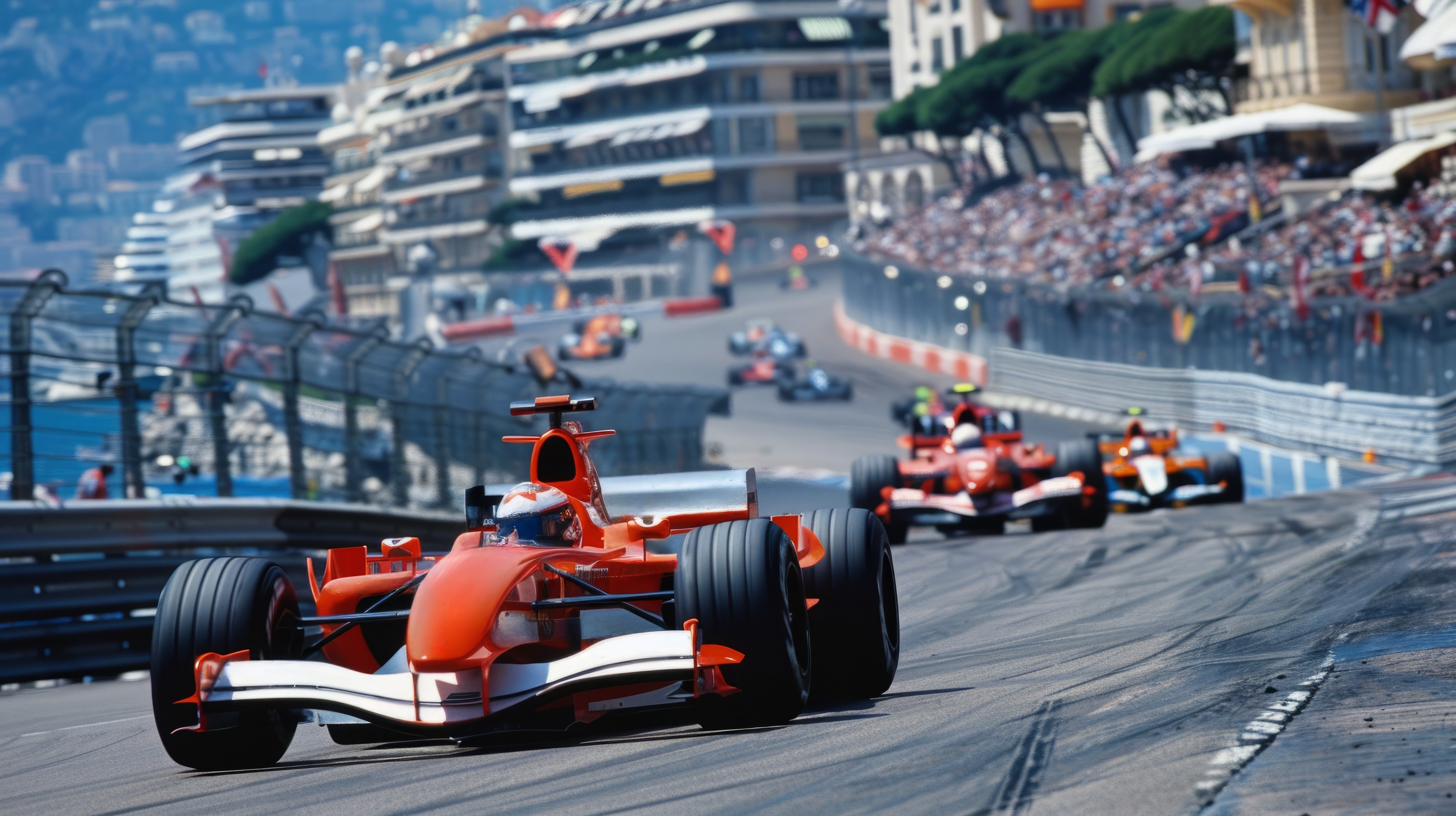
Monaco Grand Prix 2026

06/04/2026-06/07/2026

100,000

Monaco Grand Prix 2026

06/04/2026-06/07/2026

100,000

Explore Guide

FIFA World Cup 2026

06/11/2026-07/19/2026

5,000,000

FIFA World Cup 2026

06/11/2026-07/19/2026

5,000,000

Explore Guide
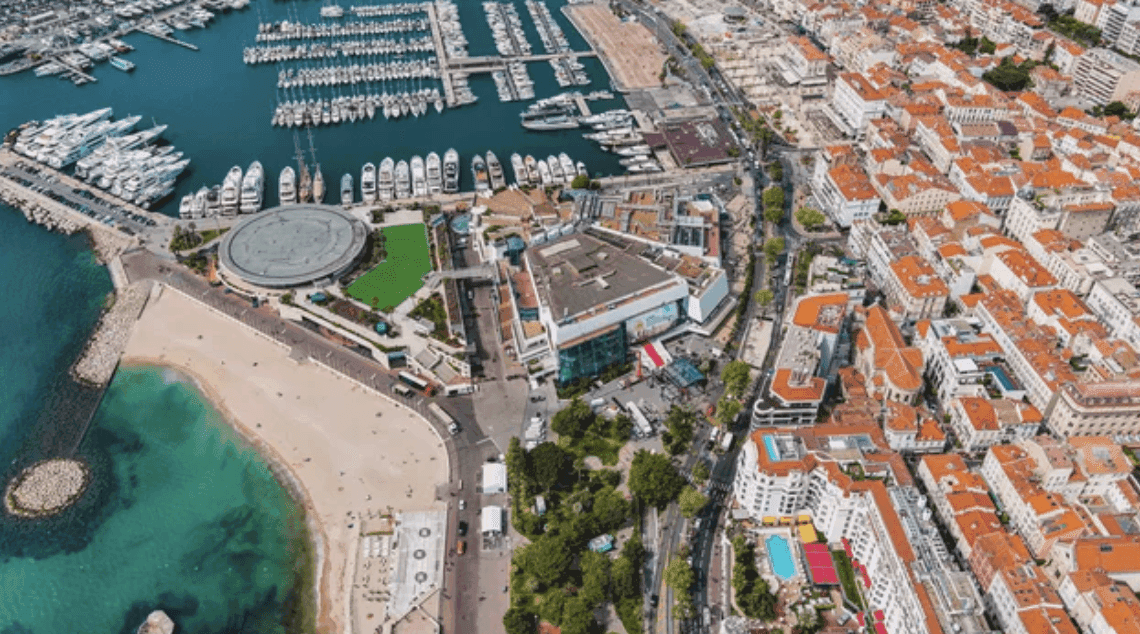
Cannes Lions Festival 2026

06/04/2026-06/07/2026

15,000

Cannes Lions Festival 2026

06/04/2026-06/07/2026

15,000

Explore Guide

View All Events Weeks

The Meet Goes Global

What began in New York in 2024 now crosses the Atlantic for the first time. After two seasons at home in the United States, Athlos, the all-women's meet founded by Reddit co-founder Alexis Ohanian, goes global, and London is where it starts. The meet arrives in Britain with its full weight behind it, and with the whole of its 2026 calendar riding on one night at StoneX.

A Field Built for Noise

The field is the draw. Sha'Carri Richardson, Gabby Thomas, Tara Davis-Woodhall, Masai Russell and Marileidy Paulino headline a lineup made for volume, with British Olympic champion Keely Hodgkinson giving the home crowd its own reason to arrive early. Seven disciplines, six athletes apiece, one night: the 100m hurdles, 100m, 200m, 400m, 800m, mile and long jump, each won under the lights, each winner crowned with the Tiffany & Co. crown that has become the meet's signature.

Why London

London is a deliberate choice, not a convenient one. Few cities turn out for athletics the way this one does, something Ohanian acknowledged when he called London "exactly where we wanted to start." StoneX Stadium gives the meet an intimate, made-for-noise setting rather than a cavernous one, the kind of room where a fast 200m is felt as much as watched. The gun goes at 7pm on a Friday, a slot engineered for a crowd that has somewhere to be afterward and every reason to stay. And the reach extends well past the gates: the BBC will carry the meet live and on demand across its digital platforms, putting Richardson and Hodgkinson in front of a national audience at no cost to the viewer.

More Than a Meet

Beneath the spectacle sits a quieter argument about how the sport should treat its stars. The 2026 season carries the largest athlete compensation package in the league's short history, alongside an equity model, described by the league as an industry first, that gives eligible competitors a stake in Athlos itself. In a discipline that has not always paid its biggest names what they are worth, letting the athletes own a piece of the thing they fill is a statement as much as a structure.

Then there is the show. Athlos has always understood that a stadium is also a stage. In 2024 Megan Thee Stallion closed the night; this year's musical guest is still under wraps, one more reason to arrive early and stay past the last final. Expect stadium lights, broadcast-scale production, athlete-led storytelling piped through the venue, and a closing crown ceremony staged with the confidence of a headline act. The racing is the reason, but the evening is designed to feel like an event you attend, not a meet you watch.

That instinct, to treat elite sport as culture rather than fixture, is what has made Athlos worth watching, and it is what London inherits on 18 September. The fastest women on earth, a home crowd that knows how to roar, a broadcast that carries it nationwide, and a single stage with a crown at the end of it. This is women's track and field claiming its moment, and choosing London to do it.

Athlos London runs on 18 September at StoneX Stadium, Barnet. Tickets are on sale at athlos.com and through Ticketmaster UK.

The Meet Goes Global

What began in New York in 2024 now crosses the Atlantic for the first time. After two seasons at home in the United States, Athlos, the all-women's meet founded by Reddit co-founder Alexis Ohanian, goes global, and London is where it starts. The meet arrives in Britain with its full weight behind it, and with the whole of its 2026 calendar riding on one night at StoneX.

A Field Built for Noise

The field is the draw. Sha'Carri Richardson, Gabby Thomas, Tara Davis-Woodhall, Masai Russell and Marileidy Paulino headline a lineup made for volume, with British Olympic champion Keely Hodgkinson giving the home crowd its own reason to arrive early. Seven disciplines, six athletes apiece, one night: the 100m hurdles, 100m, 200m, 400m, 800m, mile and long jump, each won under the lights, each winner crowned with the Tiffany & Co. crown that has become the meet's signature.

Why London

London is a deliberate choice, not a convenient one. Few cities turn out for athletics the way this one does, something Ohanian acknowledged when he called London "exactly where we wanted to start." StoneX Stadium gives the meet an intimate, made-for-noise setting rather than a cavernous one, the kind of room where a fast 200m is felt as much as watched. The gun goes at 7pm on a Friday, a slot engineered for a crowd that has somewhere to be afterward and every reason to stay. And the reach extends well past the gates: the BBC will carry the meet live and on demand across its digital platforms, putting Richardson and Hodgkinson in front of a national audience at no cost to the viewer.

More Than a Meet

Beneath the spectacle sits a quieter argument about how the sport should treat its stars. The 2026 season carries the largest athlete compensation package in the league's short history, alongside an equity model, described by the league as an industry first, that gives eligible competitors a stake in Athlos itself. In a discipline that has not always paid its biggest names what they are worth, letting the athletes own a piece of the thing they fill is a statement as much as a structure.

Then there is the show. Athlos has always understood that a stadium is also a stage. In 2024 Megan Thee Stallion closed the night; this year's musical guest is still under wraps, one more reason to arrive early and stay past the last final. Expect stadium lights, broadcast-scale production, athlete-led storytelling piped through the venue, and a closing crown ceremony staged with the confidence of a headline act. The racing is the reason, but the evening is designed to feel like an event you attend, not a meet you watch.

That instinct, to treat elite sport as culture rather than fixture, is what has made Athlos worth watching, and it is what London inherits on 18 September. The fastest women on earth, a home crowd that knows how to roar, a broadcast that carries it nationwide, and a single stage with a crown at the end of it. This is women's track and field claiming its moment, and choosing London to do it.

Athlos London runs on 18 September at StoneX Stadium, Barnet. Tickets are on sale at athlos.com and through Ticketmaster UK.

The Meet Goes Global

What began in New York in 2024 now crosses the Atlantic for the first time. After two seasons at home in the United States, Athlos, the all-women's meet founded by Reddit co-founder Alexis Ohanian, goes global, and London is where it starts. The meet arrives in Britain with its full weight behind it, and with the whole of its 2026 calendar riding on one night at StoneX.

A Field Built for Noise

The field is the draw. Sha'Carri Richardson, Gabby Thomas, Tara Davis-Woodhall, Masai Russell and Marileidy Paulino headline a lineup made for volume, with British Olympic champion Keely Hodgkinson giving the home crowd its own reason to arrive early. Seven disciplines, six athletes apiece, one night: the 100m hurdles, 100m, 200m, 400m, 800m, mile and long jump, each won under the lights, each winner crowned with the Tiffany & Co. crown that has become the meet's signature.

Why London

London is a deliberate choice, not a convenient one. Few cities turn out for athletics the way this one does, something Ohanian acknowledged when he called London "exactly where we wanted to start." StoneX Stadium gives the meet an intimate, made-for-noise setting rather than a cavernous one, the kind of room where a fast 200m is felt as much as watched. The gun goes at 7pm on a Friday, a slot engineered for a crowd that has somewhere to be afterward and every reason to stay. And the reach extends well past the gates: the BBC will carry the meet live and on demand across its digital platforms, putting Richardson and Hodgkinson in front of a national audience at no cost to the viewer.

More Than a Meet

Beneath the spectacle sits a quieter argument about how the sport should treat its stars. The 2026 season carries the largest athlete compensation package in the league's short history, alongside an equity model, described by the league as an industry first, that gives eligible competitors a stake in Athlos itself. In a discipline that has not always paid its biggest names what they are worth, letting the athletes own a piece of the thing they fill is a statement as much as a structure.

Then there is the show. Athlos has always understood that a stadium is also a stage. In 2024 Megan Thee Stallion closed the night; this year's musical guest is still under wraps, one more reason to arrive early and stay past the last final. Expect stadium lights, broadcast-scale production, athlete-led storytelling piped through the venue, and a closing crown ceremony staged with the confidence of a headline act. The racing is the reason, but the evening is designed to feel like an event you attend, not a meet you watch.

That instinct, to treat elite sport as culture rather than fixture, is what has made Athlos worth watching, and it is what London inherits on 18 September. The fastest women on earth, a home crowd that knows how to roar, a broadcast that carries it nationwide, and a single stage with a crown at the end of it. This is women's track and field claiming its moment, and choosing London to do it.

Athlos London runs on 18 September at StoneX Stadium, Barnet. Tickets are on sale at athlos.com and through Ticketmaster UK.